
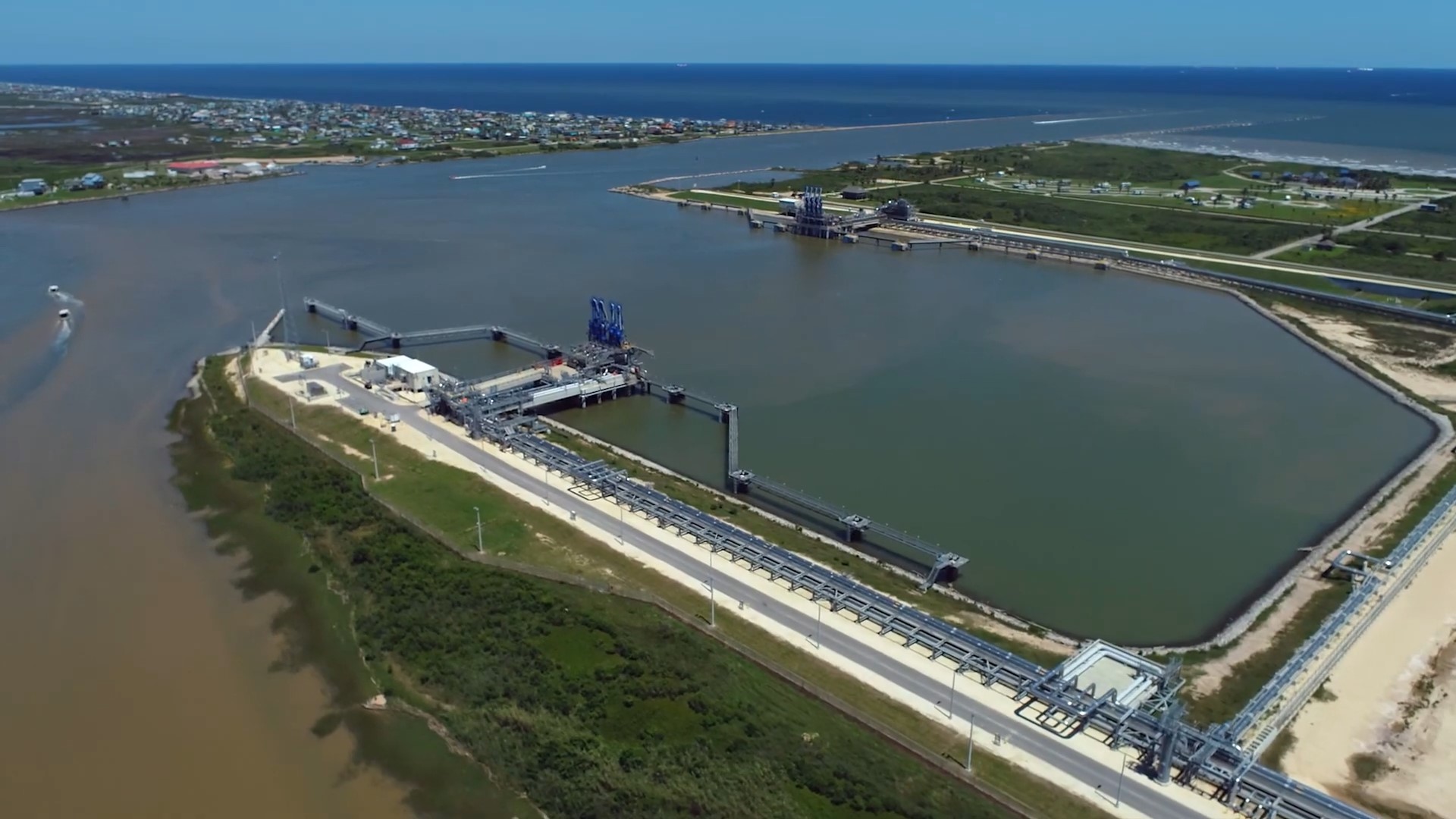
Freeport LNG, the operator of the three-train 15 mtpa liquefaction plant in Texas, expects to restart the first train this week after the terminal’s fin fan air coolers were damaged during Hurricane Beryl.
The LNG terminal operator ramped down production at its liquefaction end export facility on Sunday, July 7, ahead of Hurricane Beryl making landfall.
“We are safely progressing our efforts towards the phased restart of our liquefaction operations,” a Freeport LNG spokeswoman told LNG Prime on Monday.
She said that Freeport LNG is “completing initial repairs on the damage sustained to our fin fan air coolers in the hurricane and anticipate restarting the first train this week”.
Freeport LNG plans to restart the remaining two trains “shortly thereafter”.
Moreover, the spokeswoman said production levels after restart would be at “reduced rates for a period of time” as Freeport LNG continues repairs while operating the facility.
“Production will steadily ramp up to full rates as these repairs are completed,” she added.
Capacity boost
In May, Freeport LNG resumed operations at all of its three liquefaction trains.
Prior to that, the LNG terminal operator said on March 20 that only the third liquefaction train was operating.
Freeport LNG also used the outage to accelerate a debottlenecking project that will result in the installation of additional compressor capacity across the facility’s three liquefaction unit trains.
The debottlenecking project will increase Freeport LNG’s production capacity from an excess of 15 mtpa to just over 16.5 mtpa.
Freeport LNG’s spokeswoman previously said that the LNG terminal operator has completed the “vast majority of the work related to our debottlenecking project and are working to implement the benefits of those efforts”.
Besides the debottlenecking project, Freeport LNG’s planned train 4, which has received all regulatory approvals, would add an additional 25 percent LNG production capacity.
Of the 15 mtpa of Freeport LNG’s export capacity, 13.4 mtpa has been sold to Osaka Gas, Jera, BP, TotalEnergies, and SK E&S.