
This story requires a subscription
This includes a single user license.
In November 2025, NextDecade initiated the pre-filing process with FERC for the sixth liquefaction train, saying that it would file a full application for this expansion in 2026.
NextDecade’s Rio Grande LNG filed the full application with FERC on May 26.
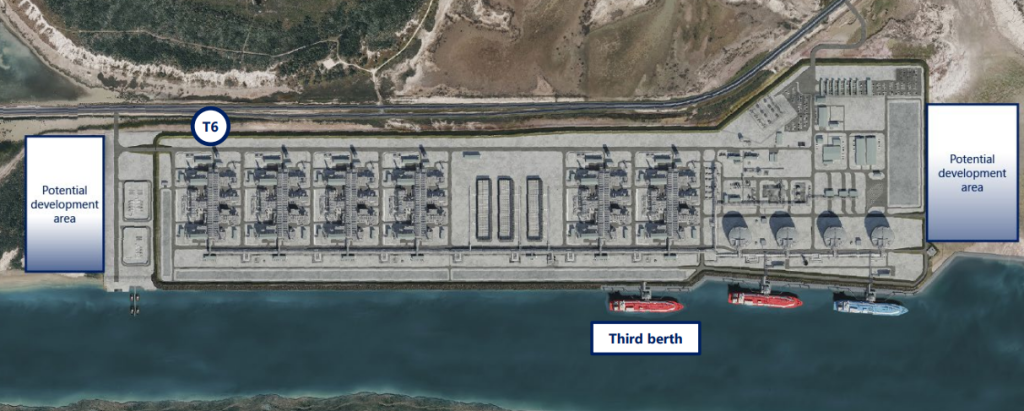
Specifically, RGLNG Train 6 is proposing to site, construct, and operate one new liquefaction train, one new marine jetty (berth 3), and associated facilities.
Train 6 will be capable of producing approximately 6.03 mtpa of LNG, and the third berth will be sized to accommodate LNG carriers with
capacities ranging from 125,000 cbm to 216,000 cbm
The Project is anticipated to increase maximum LNG vessel traffic up to 510 calls per year to the Rio Grande LNG terminal
Rio Grande LNG requests that the Commission grant this application, on an expedited basis, by no later than March 2027.
Additionally, Rio Grande LNG requests that the Commission allow seven years from the date of the authorization order to complete construction and place the project facilities in service, to account for potential “adverse weather and other unavoidable construction schedule delays.”
NextDecade’s Rio Grande LNG just secured a three-year extension from FERC to complete construction and place into service five trains at its LNG export plant in Texas.
In July 2023, NextDecade took the final investment decision on the first three Rio Grande LNG trains.
In September and October last year, NextDecade made the final investment decisions on the fourth and fifth trains at its Rio Grande LNG facility.
This brings the total expected LNG production capacity under construction at Rio Grande LNG to approximately 30 mtpa.
NextDecade expects the facility to receive first gas by the end of this year and start shipping LNG produced at the first train in the first half of 2027.
Expedited review
“RGLNG Train 6 spent significant time developing the project in advance of commencing the pre-filing process, which enabled it to file all 13 draft resource reports at an early juncture, providing stakeholders with significant time to review the information about the proposed project,” Rio Grande LNG said in the application.
Throughout the process, the public, interested agencies, and other stakeholders were afforded ample opportunities to participate and provide feedback on the proposed project, it said.
RGLNG Train 6 is requesting expedited review from FERC for a number of reasons.
First, the outbreak of conflict in the Middle East, has resulted in “significant near- and long-term global LNG supply disruptions, which have increased the urgent need for providing increased LNG cargoes to U.S. allies and trading partners,” Rio Grande LNG said
The firm noted that global competitors, such as Argentina’s YPF, Italy’s Eni, and Spain’s Repsol, recently have indicated an intent to expedite development of LNG export facilities in an effort to address the supply shortage in international markets.
“It is vital that the U.S. not fall behind its global competitors,” Rio Grande LNG said.
Second, the project, and the requisite environmental review of its impacts, is limited in scope, according to Rio Grande LNG.
As the Commission has previously acknowledged, it has compiled a “voluminous record” in conjunction with its review of the authorized RGLNG terminal over a period of nearly ten years.
In this regard, the Commission previously authorized, and reviewed impacts associated with, a sixth liquefaction train at the authorized RGLNG terminal, it said.
Rio Grande LNG said that it is now proposing to site, construct, and operate Train 6, which largely replicates the design of the five previously-authorized (and currently under construction) liquefaction trains.