
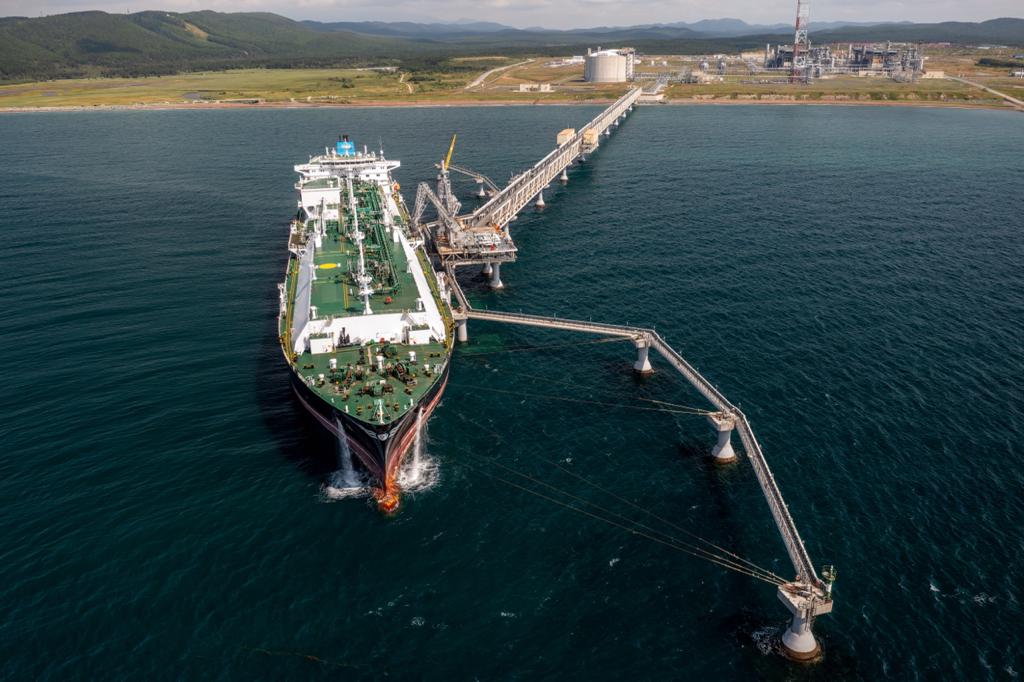
Russia’s Sakhalin Energy, the operator of the Sakhalin-2 LNG export terminal, is searching for new markets and buyers after it launched operations as a new legal entity.
President Vladimir Putin signed a decree in June allowing Russia to take charge of the Sakhalin-2 project.
Sakhalin Energy LLC, the new operator of the Sakhalin-2 project, launched its operations on August 19.
The firm said in a statement on Friday it “continues to operate in full compliance” with the production sharing agreement, adding that oil and gas production and export “are carried out as usual in accordance with the current schedule and current market situation.”
Roman Dashkov, CEO of Sakhalin Energy said in the statement that the company’s “key priority is to meet our commitments to our customers in accordance with the terms of the contracts.”
“Today, we are actively searching for new markets and expanding our customer portfolio enhancing the competitiveness of the Sakhalin LNG,” Dashkov said in the statement.
Shell unlikely to take stake in new entity
The Sakhalin-2 LNG facility started producing LNG back in 2009 with a design capacity of 9.6 mtpa, but due to technical improvements and upgrades, together with weather and temperature conditions, production rose by 20 percent.
Shell had a 27.5 percent interest in in the original entity, while Russia’s Gazprom had a 50 percent operating stake. Japan’s Mitsui owned 12.5 percent stake and compatriot Mitsubishi had 10 percent in the plant.
Gazprom remains the operator of the new entity. Mitsui and Mitsubishi decided to retain their stakes in the new entity, according to local media reports.
Shell said earlier this year it would exit its joint ventures with Russia’s Gazprom and related entities, including its stake in the Sakhalin-2 LNG export terminal. The firm has been in talks since to sell the stake.
Besides the stake, Shell also had a contract to buy about 1 mtpa from Sakhalin LNG.
Shell’s CEO Ben van Beurden recently said that “it’s highly unlikely” that the firm would buy into the new Russian entity.
“That’s not in line with our intentions to leave our asset position in Russia. It, of course, throws little bit more uncertainty how exactly we will exit, but we are pretty clear on our intent,” van Beurden said.
Japan takes most of Sakhalin LNG volumes
Most of the volumes produced at the Sakhalin LNG plant land in Japan, followed by South Korea, Taiwan, and China.
Japanese companies Hiroshima Gas, Jera, Kyushu Electric, Osaka Gas, Saibu Gas, Toho Gas, and Tohoku Electric receive LNG supplies from the Sakhalin plant, according to GIIGNL.
Other buyers include South Korea’s Kogas and Taiwan’s CPC.
According to Nikkei, Jera and Tokyo Gas have already renewed their contracts for Sakhalin LNG volumes with the new entity.