
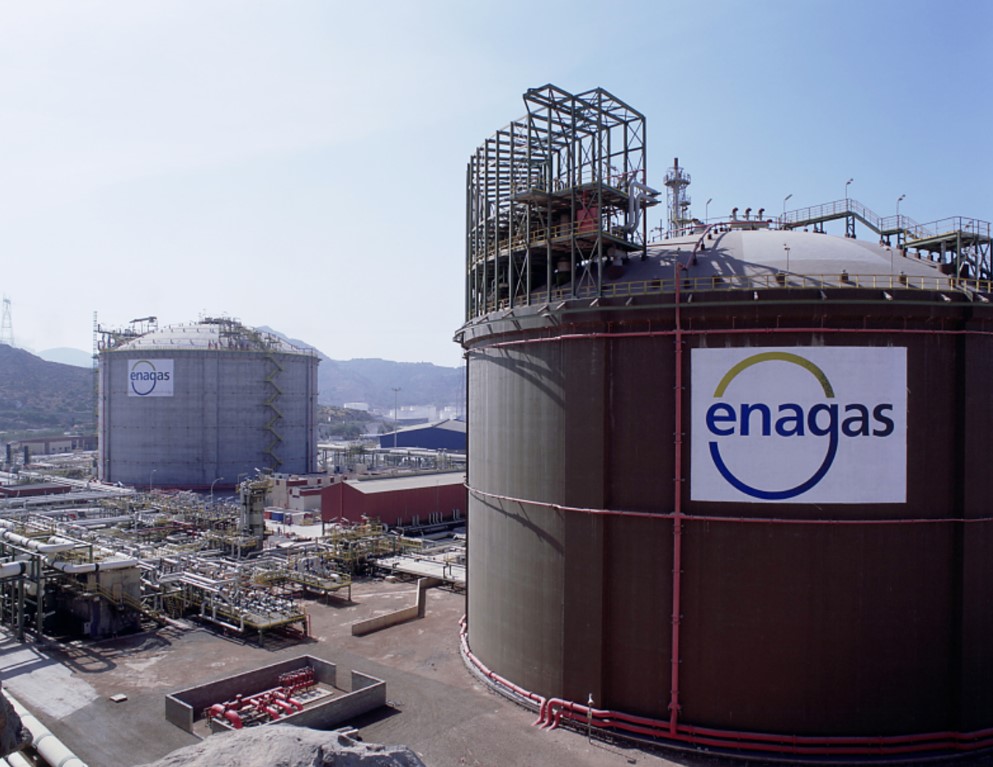
Spanish LNG imports dropped by 10.3 percent in January while reloaded volumes more than doubled when compared to the same month last year, according to the country’s LNG terminal operator, Enagas.
LNG imports reached about 23.3 TWh in January and accounted for 68.1 percent of the total gas imports. In December, LNG imports reached some 27.8 TWh.
Including pipeline imports from Algeria, gas imports to Spain reached about 34.2 TWh last month, down from some 37.8 TWh in January last year, Enagas said in its monthly report.
Moreover, gas demand in January dropped by 17.1 percent year-on-year to 37.7 TWh. Demand for power generation declined by 50.5 percent year-on-year to 5.7 TWh last month while conventional demand dropped by 21.1 percent to 23.8 TWh, the LNG terminal operator said.
Enagas operates a large network of gas pipelines and has four LNG import plants in Barcelona, Huelva, Cartagena, and Gijon.
It also owns 50 percent of the BBG regasification plant in Bilbao and 72.5 percent of the Sagunto plant while Reganosa operates the Mugardos plant.
Enagas is working to launch its El Musel LNG facility in Gijon with the capacity to unload and load 100 carriers per year.
US, Nigeria, Russia biggest LNG suppliers
The six operational Spanish LNG regasification terminals unloaded 26 cargoes last month, the same as in January last year, according to Enagas.
US remains the biggest supplier of LNG to Spain with some 7.1 TWh or about 20.7 percent of the total gas and LNG imports in January. US LNG supplies almost halved when compared to 13.1 TWh last year, the data shows.
On the other hand, LNG volumes from Nigeria rose some 37 percent to 6.93 TWh last month while supplies from Russia almost tripled when compared to January 2022 and reached some 6.37 TWh.
Other LNG sources in January include Qatar, Egypt, and Trinidad and Tobago, the data shows.
Reloads surged in January
Spanish LNG terminals loaded about 3.90 TWh in January, compared to some 1.78 TWh in January last year.
The Sagunto LNG terminal reloaded about 1.73 TWh of LNG, followed by Barcelona with about 0.9 TWh.
Also, the number of truck loads at the LNG terminals dropped by 16.3 percent year-on-year to 958, the data shows.
Enagas previously said that the loading of LNG carriers from Spanish terminals had increased by 44.9 percent year-on-year in 2022 to 24.8 TWh.
Many of these reloads have been destined for other EU countries, such as Italy or Germany, the firm said.