This story requires a subscription
This includes a single user license.
Nakilat reported a net profit of 439 million riyals ($117 million) for the first quarter of 2026, a rise of 1.3 percent compared to 433 million riyals in the same quarter last year.
Last year, the company’s net profit rose 3.1 percent to 1.69 billion riyals.
Nakilat said its net profit increased by 1.3 percent in the first quarter, driven by overall higher performance on its shipping activities and reduced finance charges.
The increase was partially offset by lower overall performance from the shipyard business.
Nakilat said its total income increased by 8.7 percent year-on-year to 1.21 billion riyals, primarily due to the consolidation of Qatar Shipyard Technology Solutions and LPG vessels revenues, not present in the comparative period, and higher revenues from wholly-owned LNG vessels.
Moreover, the company’s expenses increased by 13.8 percent, primarily driven by the consolidation of Qatar Shipyard Technology Solutions & LPG vessels expenses.
Nakilat said this was partially offset by lower finance charges and reduced operating costs
from wholly-owned LNG vessels.
“Despite the geopolitical challenges faced by Nakilat during the first quarter of 2026, the company was able to maintain its operational performance and take immediate and effective measures to rationalize expenses and reduce negative impact across its various business sectors, especially in dry dock facilities, agency services, and towing services, which witnessed a noticeable decline in their operating rates,” Abdullah Al Sulaiti, CEO of Nakilat, said.
LNG fleet
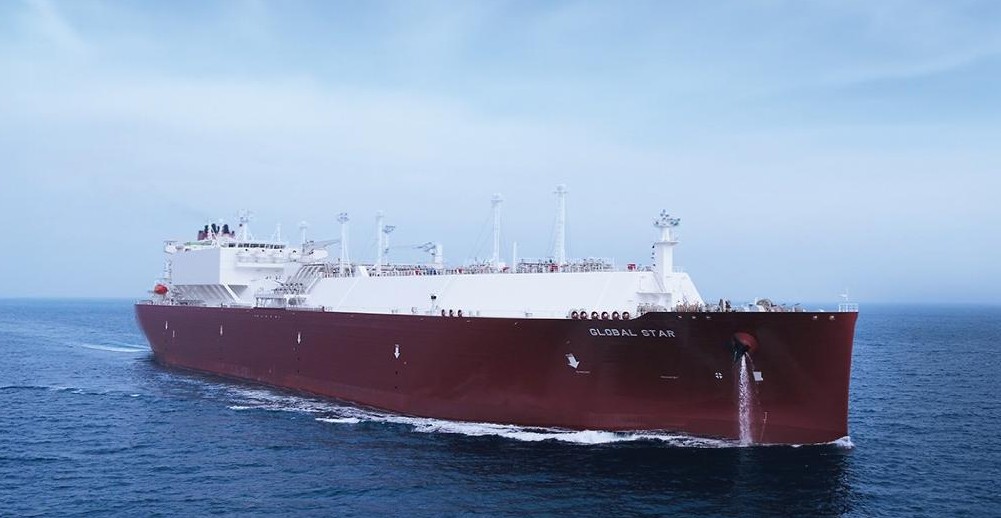
Nakilat’s fleet mainly ships LNG for state-owned LNG producer QatarEnergy.
QatarEnergy stopped producing LNG at its giant Ras Laffan complex on March 2 due to military attacks on its operating facilities. The LNG producer declared force majeure to its affected LNG buyers on March 4.
The LNG producer announced that it expects the damage to its Ras Laffan complex caused by missile strikes to cost about $20 billion a year in lost revenue and to take up to five years to repair, impacting supply to markets in Europe and Asia.
Nakilat said it remains on track with its newbuild program, which includes LNG carriers and LPG/ammonia gas carriers under construction.
In March last year, Nakilat marked a milestone with two steel-cutting ceremonies for a total of ten of its new LNG carriers and four LPG/ammonia gas carriers at Hanwha Ocean and HD Hyundai Samho shipyards in South Korea.
In addition, South Korean shipbuilder HD Hyundai Heavy Industries officially started building in May Nakilat’s first of 17 LNG carriers as part of an order placed last year.
Nakilat’s fleet currently includes 24 conventional LNG carriers, 31 Q-Flex vessels (210,000-217,000 cbm), 14 Q-Max vessels (263,000-266,000 cbm), and one FSRU. This includes jointly-owned LNG carriers.
In January 2024, Nakilat placed orders worth about $955 million with HD Hyundai Samho to construct two LNG tankers and four LPG/ammonia carriers.
Moreover, Nakilat signed charter agreements in March 2024 with QatarEnergy for 25 conventional-size LNG carriers as part of the second phase of its massive shipbuilding program.
QatarEnergy also signed a time charter and operation agreement with Nakilat for nine 271,000-cbm LNG carriers.
Nakilat has 36 LNG carriers and four LPG/ammonia carriers on order.
The total vessel count in the company’s fleet will reach 114 once all the vessels are delivered, including 105 LNG carriers.