This story requires a subscription
This includes a single user license.
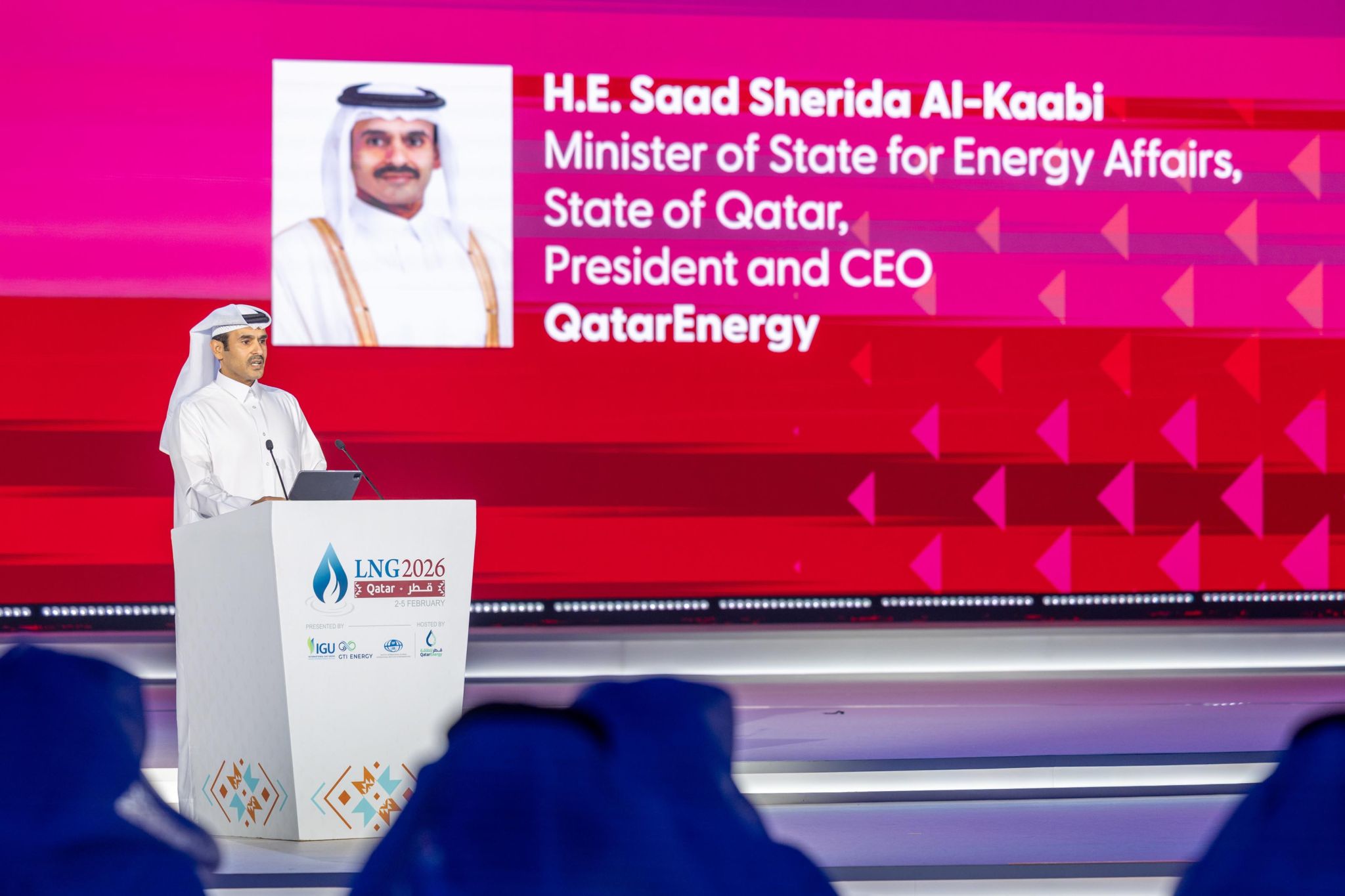
Al-Kaabi spoke at the opening of the LNG2026 conference in Doha on Monday.
“We have launched the largest shipbuilding program in the industry’s history, comprising 128 state-of-the-art LNG carriers with outstanding operational and environmental standards,” he said.
These vessels include 104 conventional and 24 QC-Max vessels, while yards in South Korea and China are building them.
“We have already received 38 new vessels and will receive a new one every three weeks. This will give QatarEnergy the largest LNG carrier fleet in the world, reaching about 200 vessels within the next few years,” Al-Kaabi said.
The majority of these vessels will serve QatarEnergy’s expansion projects, which will double Qatar’s LNG production.
“The mega-projects we have launched a few years ago will more than double QatarEnergy’s LNG production from 77 million tons per annum to 160 million tons per annum, including 142 million tons per annum from Qatar’s North Field. Hereby, our projects will contribute about 40 percent of the new global LNG supplies over the next decade,” Al-Kaabi said.
QatarEnergy is working on the giant North Field LNG expansion program, which includes the North Field South, North Field East, and North Field West projects.
In February 2024, QatarEnergy announced the North Field West project, which will add 16 mtpa of LNG to the overall expansion of the North Field.
Moreover, the first two projects include six mega trains, each with a production capacity of 8 mtpa of LNG.
Four of these are part of the North Field East expansion project, and two are part of the North Field South expansion project.
Increasing gas demand
Al-Kaabi also joined CEOs of TotalEnergies, ExxonMobil, Shell, and ConocoPhillips for a panel on Monday.
“We continue to believe in gas as the energy of the future and that increasing demand will continue to be driven by global economic growth and other factors like artificial intelligence and data centers,” he said.
Furthermore, QatarEnergy, along with its partners represented on the panel, “are building LNG for the future with the lowest carbon footprint you can have. Everywhere where you’ll see exploration blocks that are looking for oil or gas, you’ll find QatarEnergy working there,” Al-Kaabi said.
Al-Kaabi reaffirmed his long-stated position that “oil will be needed for a very long time”, adding that “people who, two years ago, have been part of the oil cancel culture, are now recognizing the need for oil and that it will not disappear in 2030 like they were saying.”