This story requires a subscription
This includes a single user license.
LNG Croatia’s managing director, Ivan Fugaš, revealed this in a social media post on Monday.
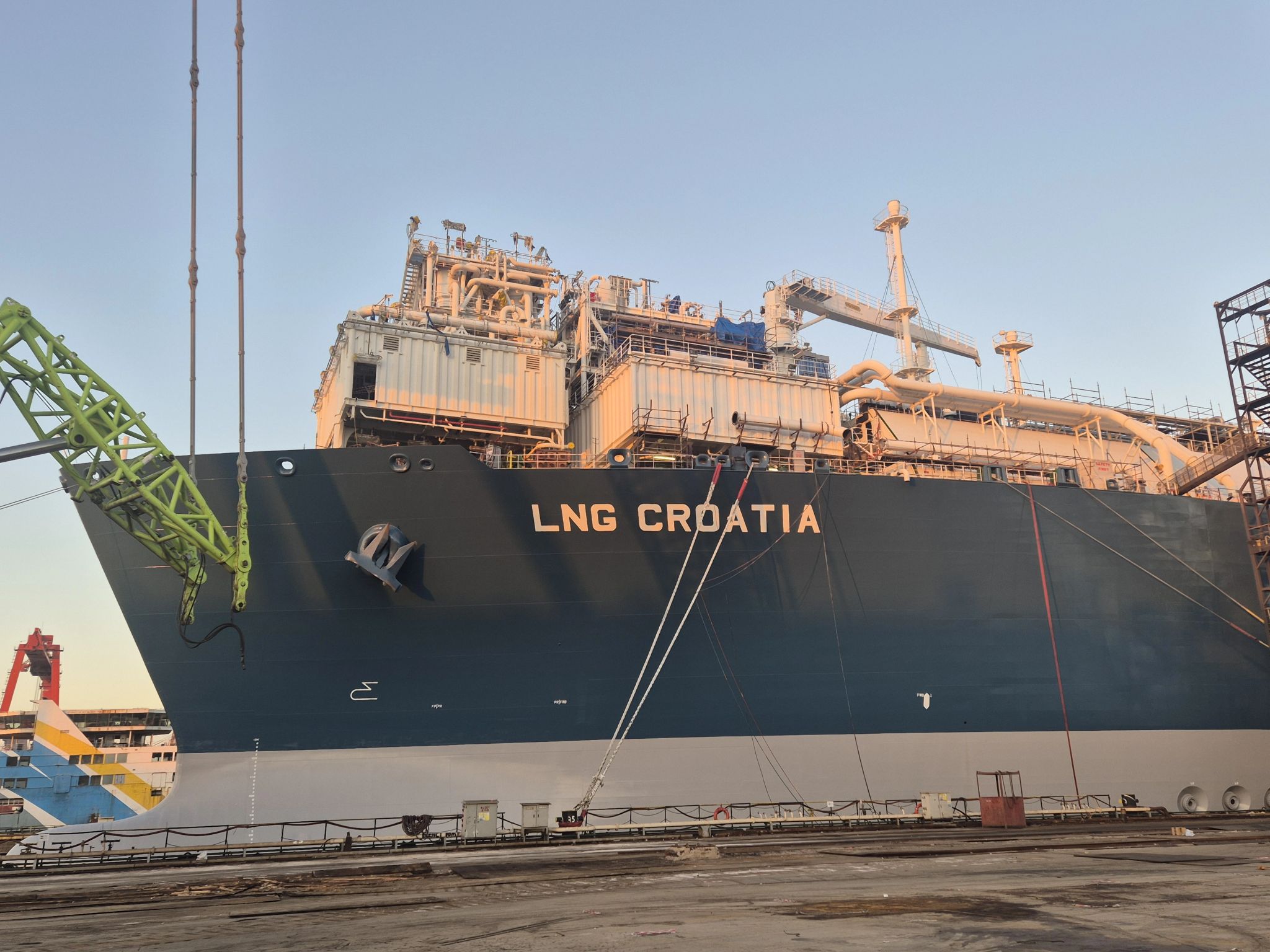
He noted that this is the final week for the FSRU in the yard, and the work is “almost over.”
In August, the FSRU left its Krk base and departed for Kuzey Star.
This is the first time for the vessel to leave its base on the island of Krk in five years.
In addition to installing the extra regasification module, all work on the five-year class renewal will be completed, along with maintenance of the FSRU vessel, LNG Croatia said.
The state-owned firm announced in a separate social media post that September 20 was the last day for the unit in dry dock.
In January this year, LNG Croatia awarded a contract to Kuzey Star.
The contract awarded to Kuzey Star is worth about 14.6 million euros ($17 million) and the scope of services includes installation, implementation, and commissioning of the new module and equipment on the FSRU.
6.1 bcm
Chinese shipbuilder Nantong CIMC Sinopacific Offshore & Engineering completed Wartsila’s regasification module, which was installed onboard the FSRU, in March this year.
The 17m15m17m module weighs 421 t, and is equipped with two LNG booster pumps, one BOG re-condenser, two LNG vaporizers, and other key equipment, according to CIMC SOE.
Norway-based Wartsila Gas Solutions, a unit of Finland’s Wartsila, awarded the module contract to CIMC SOE, a unit of CIMC Enric, in 2023.
Before that, Wartsila Gas Solutions won the contract worth about 22.9 million euros ($26.8 million) to supply the regasification module for the FSRU.
The new module supplements the vessel’s existing onboard Wartsila regasification system and will increase the FSRU terminal’s capacity with 212 mmscfd (million standard cubic feet per day) or 250,000 cbm per hour.
The current three LNG regasification units have a maximum regasification rate of 451,840 cbm per hour.
Following the upgrade, the Krk LNG facility will have a capacity of about 6.1 bcm per year.