This story requires a subscription
This includes a single user license.
The $20 billion project’s costs also increased by $4.5 billion since TotalEnergies declared force majeure on the project in April 2021 and withdrew all personnel from the site due to new attacks.
This was revealed in a letter from TotalEnergies CEO Patrick Pouyanne to Mozambique President Daniel Chapo, dated October 28.
The letter was shared on social media and reported by several agencies.
LNG Prime contacted TotalEnergies to confirm the project’s restart and provide further details.
“The Mozambique LNG consortium has taken the decision to lift the force majeure and the Mozambican Presidency was officially informed on Friday by means of a protocol letter,” a spokesperson for TotalEnergies said.
“As a final step before fully relaunching the project, Mozambique’s Council of Ministers needs to approve an addendum to the plan of development (PoD) with the updated budget and schedule,” the spokesperson said.
Last month, Pouyanne said that TotalEnergies and its partners are “ready” to restart the project.
“We are moving on. Everything is ready. In fact, we are mobilizing on the ground. But we have the last piece of the decision to officially lift the force majeure,” Pouyanne said.
He said that the government of Mozambique needs to “approve the updated development plan because we need to update it with a new target in terms of starting operations.”
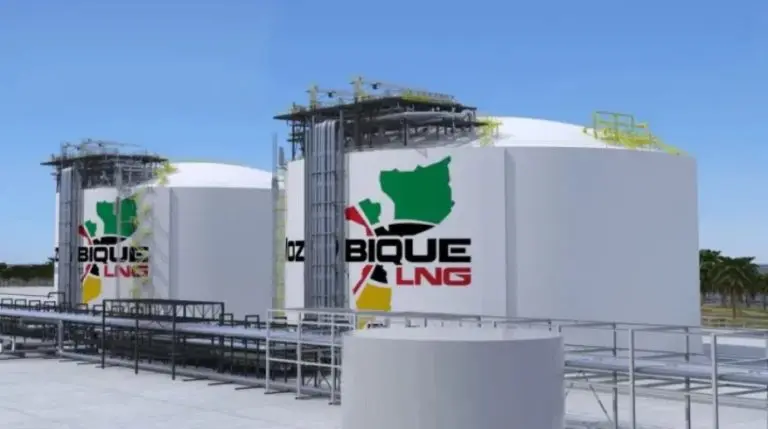
Mozambique LNG includes the development of offshore gas fields in Mozambique’s Area 1 and a liquefaction plant at the Afungi complex.
Besides TotalEnergies, other partners in the project include Japan’s Mitsui, Mozambique’s ENH, Thailand’s PTT, and Indian firms ONGC, Bharat Petroleum, and Oil India.
Mozambique LNG’s EPC contractor is CCS JV, a venture between Saipem, McDermott, and Chiyoda.
Extension
As a final step before fully relaunching the project, the Mozambique LNG partners “look forward to receiving the approval by the government of Mozambique of the revised project cost and schedule, as submitted to the Ministry of Energy on October 2, 2024,” Pouyanne said in the letter.
“This revised budget’s approval shall cover the incremental costs incurred by the project due to the force majeure, which amount to 4.5 billion dollars, on which the government has conducted an audit for the years 2021 to 2024, the report of which the concessionaire is expecting to receive as soon as possible,” he said.
Moreover, the prolonged force majeure suspension period has “significantly” impacted the project schedule.
“The updated schedule considers that the target date for lifting of the first cargo from Train 1, initially planned in July 2024, is revised to occur by first half 2029 and the completion of the two Trains, initially planned in March 2025 before end 2029,” Pouyanne said.
As a consequence of the force majeure, the term of the Golfinho-Atum development and production period shall be extended by 4.5 years (54-month force majeure period from March 24, 2021, to October 9, 2025).
“However, in order to compensate partially the economic impact of the extended force majeure on the project economics, the concessionaire respectfully requires the government to grant an extension of the term of the Golfinho-Atum development and production period under the EPCC by a duration of 10 years,” Pouyanne said in the letter.
(This article was updated with a statement by TotalEnergies on October 27.)