This story requires a subscription
This includes a single user license.
BCUC said in a statement on Monday that it has approved FortisBC’s application for the Tilbury LNG storage expansion project.
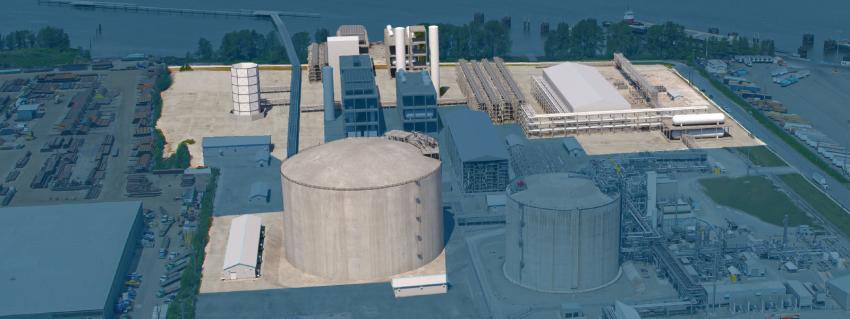
The project includes constructing a new LNG storage tank with a capacity of 142,400 cbm at FortisBC’s Tilbury facility in Delta, BC.
BCUC noted that the new tank will replace an existing 56-years old storage tank that has reached the end of its service life.
“Following a transparent and public review process that included submissions from eight interveners and feedback from individual British Columbians, the BCUC determined the project is in the public interest,” it said.
In its decision, the BCUC agreed that replacing the existing LNG storage tank is necessary for FortisBC to continue to “reliably meet customers’ increasing energy demands on peak days.”
The BCUC also found that building a larger capacity tank will address the resiliency risk of FortisBC’s natural gas delivery system.
Currently, FortisBC receives 85 percent of the natural gas it delivers to customers from a single third-party pipeline.
BCUC noted that the expanded LNG storage will help mitigate the risk of supply disruption by providing back-up storage of natural gas.
2030
Two-thirds of the new storage tank will be set aside as a reserve in the event of unexpected supply interruptions, while the remaining volume will be used to meet customers’ energy needs on high demand days.
FortisBC confirmed that the new storage tank will be used exclusively to store and supply natural gas to customers.
BCUC said the tank will not be used to provide LNG for marine fueling or for LNG export.
As a condition of approval, any future changes to the storage tank’s use will require further approval, it said.
The project is expected to be in service by 2030 at an estimated cost of C$1.14 billion ($814 million), according to BCUC.
Over the six-year construction period, the delivery portion of customers’ rates will increase incrementally by an average of approximately 1.78 percent per year, BCUC said.
Once constructed, the new storage tank is expected to reduce the need for external gas storage and delivery, generating long-term cost savings for customers, it added.
Tilbury LNG facility
Launched in 1971 with one 28,000-cbm tank, the Tilbury LNG facility already received several upgrades involving storage but also liquefaction facilities.
The Phase 1A expansion, commissioned in 2019, added a 46,000 cbm storage tank and LNG liquefaction capacity of 0.25 million tonnes per annum (mtpa) to the Tilbury LNG facility.
Last year, FortisBC and its partner Seaspan Energy, part of Seaspan, won approval from the government of Canada for their planned Tilbury LNG jetty project.
The Phase 1B expansion is intended to serve growing demand for LNG as a marine fuel by increasing liquefaction capacity by up to 0.65 mtpa.
The second expansion phase has two components and serves two functions.
The first component is an additional storage tank of up to 142,400 cbm to provide a backup energy supply to the Lower Mainland, while the second component is additional liquefaction of up to about 2.6 mtpa, according to FortisBC.