This story requires a subscription
This includes a single user license.
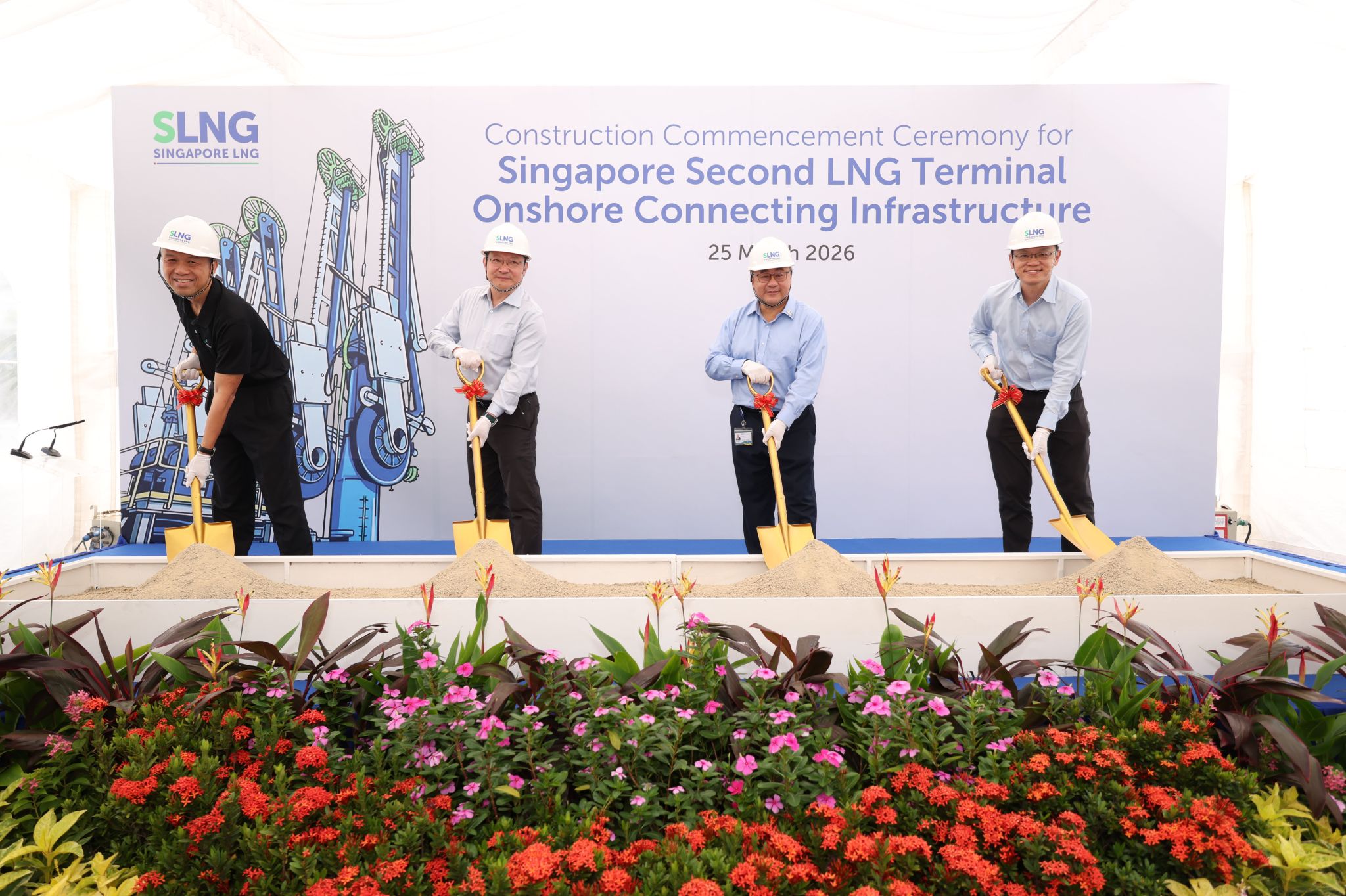
SLNG, which operates the country’s first LNG import terminal on Jurong Island, announced on Wednesday that it held a ceremony in Jurong Port to start the OCI work for the FSRU-based LNG import facility.
Among other things, the OCI will house key facilities such as the main process area, a jetty for the FSRU, and pipelines that will deliver regasified LNG into the national grid, SLNG said.
In November 2025, SLNG awarded the engineering, procurement, construction, installation, and commissioning contract to China Communications Construction (Singapore).
As per the FSRU, South Korea’s Hanwha Ocean officially began construction of MOL’s 240,000-cbm vessel, which will serve Singapore’s second LNG import terminal, in October last year.
SLNG will charter the unit under a deal it signed with Japan’s MOL in October 2024.
Singapore’s first FSRU is worth $413 million.
With a regasification capacity of 5 million tons per annum (mtpa), it will be moored at Jurong Port and connected to the gas network in 2030.
It will add to SLNG’s Jurong Island facility.
Singapore’s first LNG terminal on Jurong Island began commercial operations in May 2013.
It currently operates with two jetties, three storage tanks of 180,000 cbm each, a fourth storage tank of 260,000 cbm, and a peak sendout capacity of around 11 mtpa.
Singapore’s primary licensed term LNG importers include ExxonMobil LNG Asia Pacific, Shell Eastern Trading and its unit Pavilion Energy, and Sembcorp Fuels, according to the Energy Market Authority.
Two weeks ago, the country sought a replacement cargo from its LNG importers following a force majeure declaration by state-owned LNG producer QatarEnergy.
Qatar is a major supplier of LNG to Singapore.
QatarEnergy stopped producing LNG at its giant Ras Laffan complex on March 2 due to military attacks on its operating facilities.
It declared force majeure to its affected LNG buyers on March 4.
Last week, QatarEnergy announced that it expects the damage to its Ras Laffan complex caused by missile strikes to cost about $20 billion a year in lost revenue and to take up to five years to repair, impacting supply to markets in Europe and Asia.