This story requires a subscription
This includes a single user license.
Inpex announced on Friday that its unit Inpex Mirai Upstream has entered a sales and purchase agreement with PetroChina International Investment (Australia) Pty Ltd (CNPC) to acquire the stake in the Browse joint venture, including the Browse titles.
The Japanese firm did not provide the financial details.
Completion of the sales and purchase transaction is conditional on a number of matters,
including regulatory and Browse JV participant approvals, it said.
The development of Browse has the potential to make a “significant contribution to energy
security in Australia and in the Asia-Pacific region,” the company said.
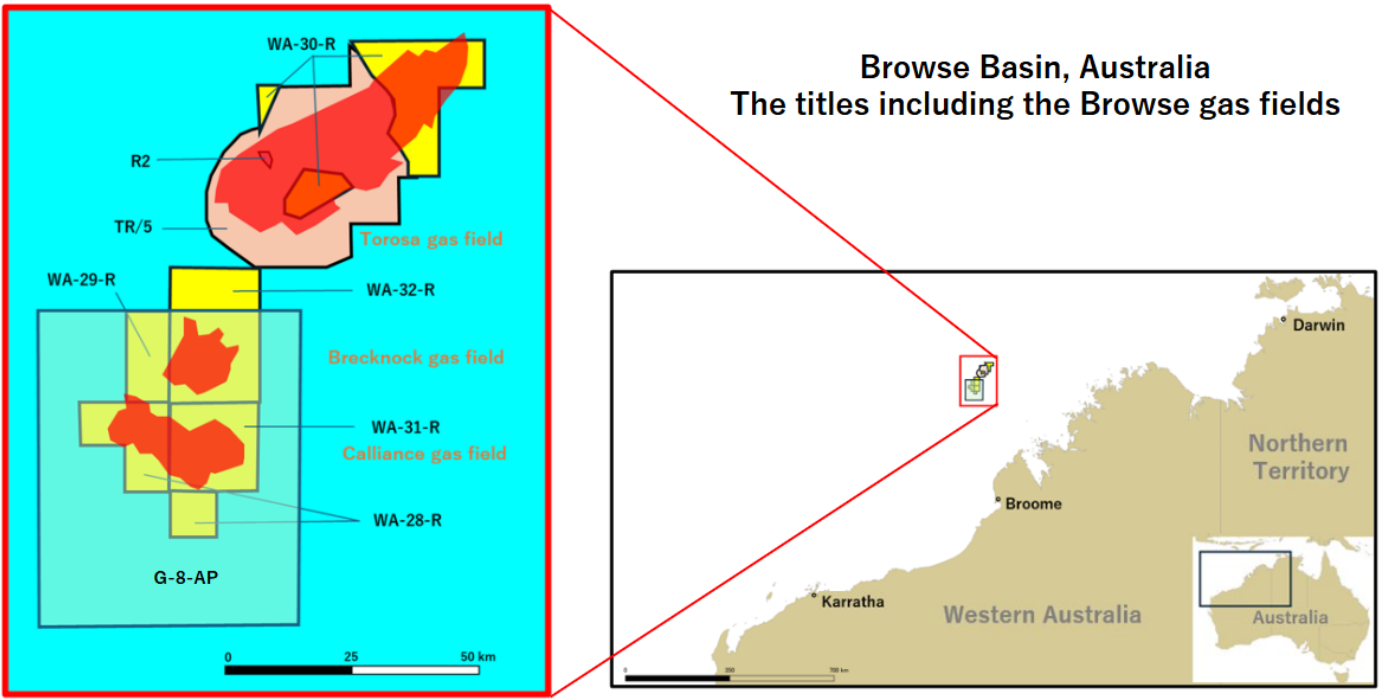
The Browse fields, which were discovered between 1971 and 2000, contain a combined contingent resource of about 13.9 trillion cubic feet of dry gas and approximately 390 million barrels of condensate.
Inpex noted that it has participated in the Australian business community since 1986.
The company’s Australian energy portfolio includes Ichthys LNG as operator, and participating interests in Prelude FLNG, Darwin LNG, Van Gogh, and Ravensworth.
$35.2 billion
Australian LNG player Woodside recently revealed that its Browse LNG project is expected to cost A$48.7 billion ($35.2 billion).
The Australian firm has a 30.6 percent operating stake in the project, BP has a 44.33 percent stake after it bought a 27 percent stake from Shell in 2023, and Japan Australia LNG, a joint venture of Mitsubishi and Mitsui, owns a 14.4 percent stake.
Woodside and its partners lodged the project proposal in 2018 with a capital estimate of A$27.3 billion, while a CCS solution was subsequently added to enable a reduction of 53 million tonnes (MT) CO2e in GHG emissions, compared to the project’s 2019 Scope 1 emissions estimate.
The Browse to NWS project has a forecast production capacity of 11.4 million tonnes per annum (LNG, LPG, and domestic gas) and a peak condensate production rate of 50,000 barrels per day.
Natural gas from the Calliance, Torosa, and Brecknock fields would be delivered to the Karratha gas plant, part of the North West Shelf project, via an approximately 900-kilometer pipeline, connected to two floating production storage and offloading facilities.