
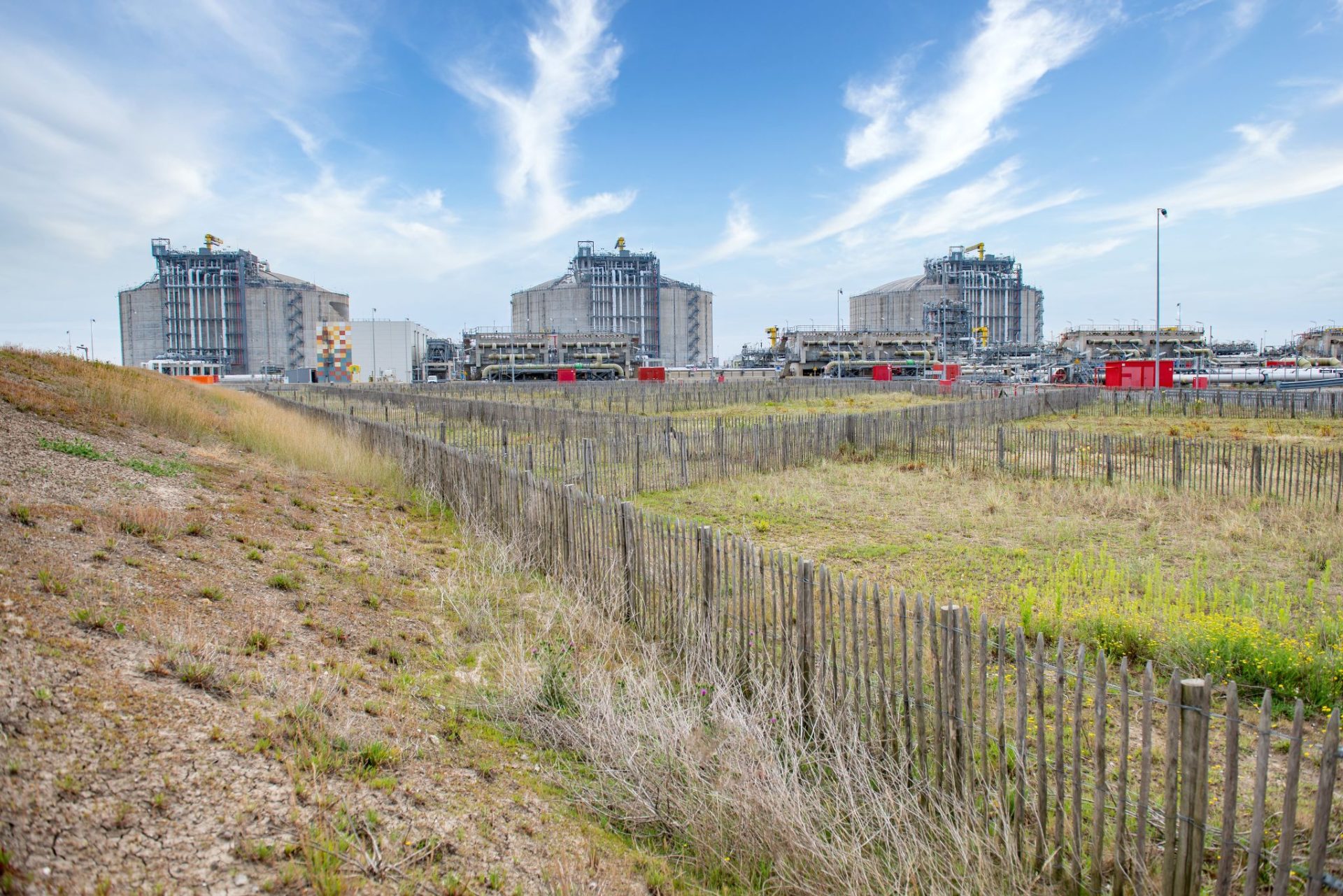
France was the top destination for US liquefied natural gas supplies in February, as European terminals continue to receive the majority of US LNG volumes, according to the Department of Energy’s newest LNG monthly report.
The DOE report shows that US terminals shipped 49.4 Bcf of LNG to France in February, 45.5 Bcf to the Netherlands, 34.1 Bcf to the UK, 22.8 Bcf to Japan, and 20.5 Bcf to Turkiye.
These five countries took 48 percent of total US LNG exports in February.
The UK was the top destination for US LNG supplies in December and January, while France was the top destination for US LNG supplies in October and November.
Prior to this, the Netherlands was the top destination for US LNG supplies for five months in a row.
US LNG exports up
The US exported in total 358.9 Bcf of LNG in February to 30 countries, up by 10 percent compared to the same month in 2023 and a drop of 9 percent from the prior month, the DOE report shows.
Europe received 234.4 Bcf or 65.3 percent of these volumes, Asia received 100.8 Bcf or 28.1 percent, and Latin America/Caribbean received 23.7 Bcf or 6.6 percent.
The DOE said that 88.9 percent of total LNG exports went to non-free trade agreement countries (nFTA), while the remaining 11.1 percent went to free trade agreement countries (FTA).
US terminals shipped 116 LNG cargoes in February, down from 127 LNG cargoes in January.
Cheniere’s Sabine Pass plant sent 39 cargoes and its Corpus Christi terminal shipped 16 cargoes, while Sempra’s Cameron LNG plant sent 20 shipments and the Freeport LNG terminal sent 16 cargoes during February.
In addition, Venture Global’s Calcasieu plant sent 13 cargoes, Elba Island LNG sent 4 cargoes, and Cove Point LNG dispatched 8 shipments.
According to DOE’s report, the average price by export terminal reached 6.31/MMBtu in February and 6.63/MMBtu in January this year.
The most expensive average price in February comes from Venture Global’s Calcasieu Pass terminal and it reached $10.21/MMBtu.
Prices at other facilities ranged between $5.09-$6.70/MMBtu, the data shows.
5886 cargoes
The report said that in the period from February 2016 through February 2024, the US exported 5886 cargoes or 18,692 Bcf to 41 countries.
The DOE data shows that South Korea remains the top destination for US LNG with 589 cargoes, and the country is followed by Japan with 470 cargoes, France with 479 cargoes, the UK with 458 cargoes, and the Netherlands with 414 cargoes.
France took more cargoes than Japan but less volumes.
Besides these five countries, Spain, China, India, Turkiye, and Brazil are in the top ten as well.