
German biofuels producer Verbio has revealed plans to ship bio-LNG produced in the US to Germany, as the European country works on diversifying its natural gas supplies.
Germany currently has no LNG import facilities but it has recently chartered four FSRUs and started building the first import terminal in Wilhelmshaven, as part of plans to cut Russian gas supplies.
Locations such as Brunsbuettel, Stade, and other will also host LNG import facilities, while most of the LNG supplies are expected to come from producers such as Qatar and the US.
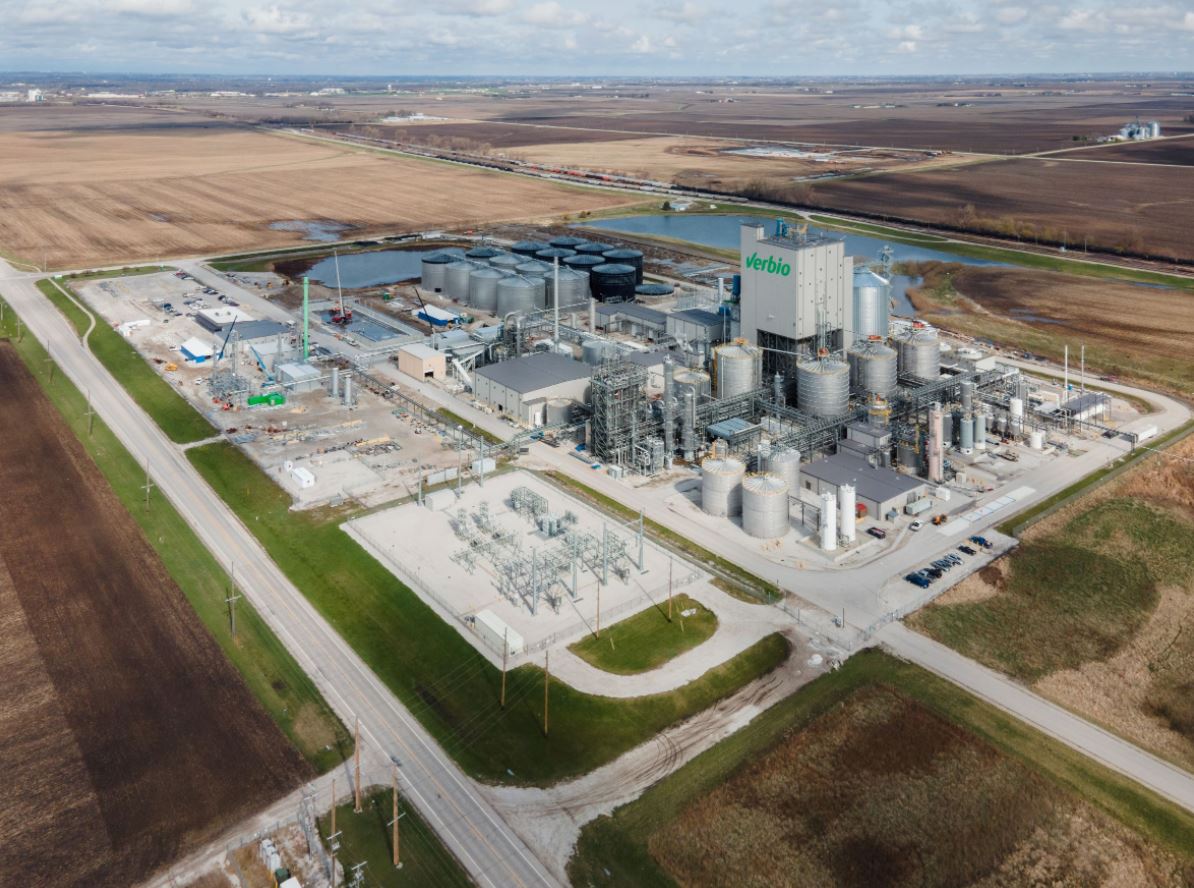
Verbio said in a statement on Monday, announcing the launch of its new renewable natural gas production facility in Nevada, Iowa, that the Midwest of the US has a “huge raw material potential” of agricultural raw materials and residues.
According to the firm, about 300 million tons of residual straw are available for bioenergy production every year.
In addition, there are “good conditions” for the production of synthetic biofuels through the use of green CO2 from the existing bioethanol plants and from the Verbio biorefineries, it said.
“In the future, Verbio plans to make this potential available for Germany and Europe by producing and importing liquefied biomethane (bio-LNG) and liquefied synthetic biofuels (SynFuels),” it said.
The construction of German LNG terminals, as for instance in Stade, is an important basis, Verbio noted.
Worth mentioning here, Germany’s Hanseatic Energy Hub is developing the Stade LNG import terminal near Hamburg and the firm previously said this hub would import LNG and low-carbon energy carriers such as bio-LNG and synthetic methane.
Verbio’s first plant in the US
Verbio’s new plant in Iowa is the company’s first facility in the US and it should achieve commercial operations until Summer this year.
CEO Claus Sauter said in the statement that Verbio would process up to 100,000 tons of corn stover into RNG every year and make it available for the market as a “climate-friendly, renewable biofuel”.
The plant injected the first RNG to the grid at the end of 2021.
Sauter said that the firm has invested almost $50 million up to date in the site. With further expansion, the company would boost the investment to at least $115 million.
In addition, the company plans to build a network of these facilities in the US.
“By 2023, we will expand the Verbio biorefinery based on the model of the German plants to an integrated RNG and bioethanol production,” he said.
Sauter said that the company aims to install another five to ten biorefineries in North America over the next five years.
“Decarbonization and defossilization are global issues. In North America, we are also multiplying our German biorefinery concept to solve the problems that we have in Germany and Europe with fossil energy,” he said.