
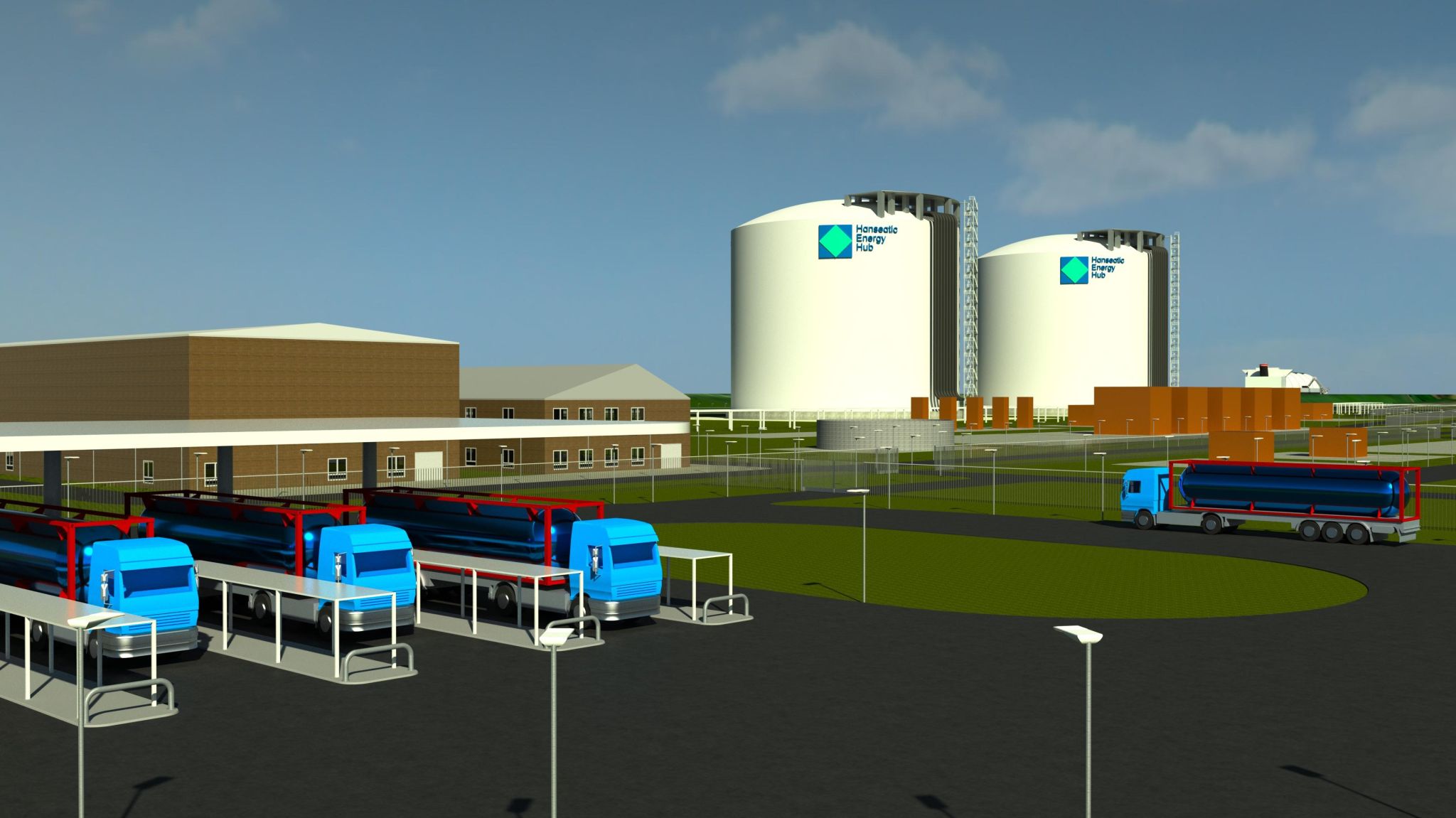
Germany’s Hanseatic Energy Hub, the developer of the Stade LNG import terminal near Hamburg, is pushing ahead with plans to develop the facility as Germany looks to reduce reliance on Russian gas.
Chancellor Olaf Scholz recently said that Germany had decided to back the construction of two LNG import terminals as part of efforts to expand options for gas imports.
The two facilities include the Brunsbuettel LNG terminal, developed by German LNG Terminal, and Uniper’s LNG import and hydrogen facility in Wilhelmshaven.
Germany is also in talks with LNG producers such as Qatar to secure supplies of the fuel.
The country currently has no large LNG import terminals.
In that regard, HEH plans to develop the LNG terminal in Stade “as quickly as possible, both in terms of permitting and commercially, to provide the required energy import infrastructure,” the developer said in a statement on Monday.
Current HEH partners include Germany’s Buss Group, Switzerland’s Partners Group, and Belgium’s Fluxys.
The LNG terminal developer was also looking to import LNG from GNL Quebec’s planned facility in Canada.
However, the Canadian province of Quebec has rejected this project, as well as the government of Canada.
Expression of interest
To accelerate the realization of the LNG import terminal, HEH is conducting an expression of interest process from March 21 to April 8.
The firm is inviting international market participants to express their interest in booking long-term capacity in Stade from 2026.
“The interest in the future German LNG market is increasingly strong. With the expression of interest process starting today, we are creating the foundation to quickly carry out the binding open season process”, Johann Killinger, managing partner of HEH, said.
Simultaneously with commercial development, HEH is pushing ahead with the permitting process.
“The permit documents for the terminal and port are expected to be submitted before Easter,” HEH said.
With its planned regasification capacity of 12 bcm per year, the LNG terminal in Stade would be able to cover about ten percent of Germany’s gas demand, according to HEH.
Located on the Elbe river within the Dow industrial park, the hub would initially handle LNG and low-carbon energy carriers such as bio-LNG and synthetic methane.
The concept also includes a truck loading facility and a jetty for bunkering vessels.
As global supply grows, it would later also be available for the import of “climate-neutral” energy sources such as ammonia, HEH said.