
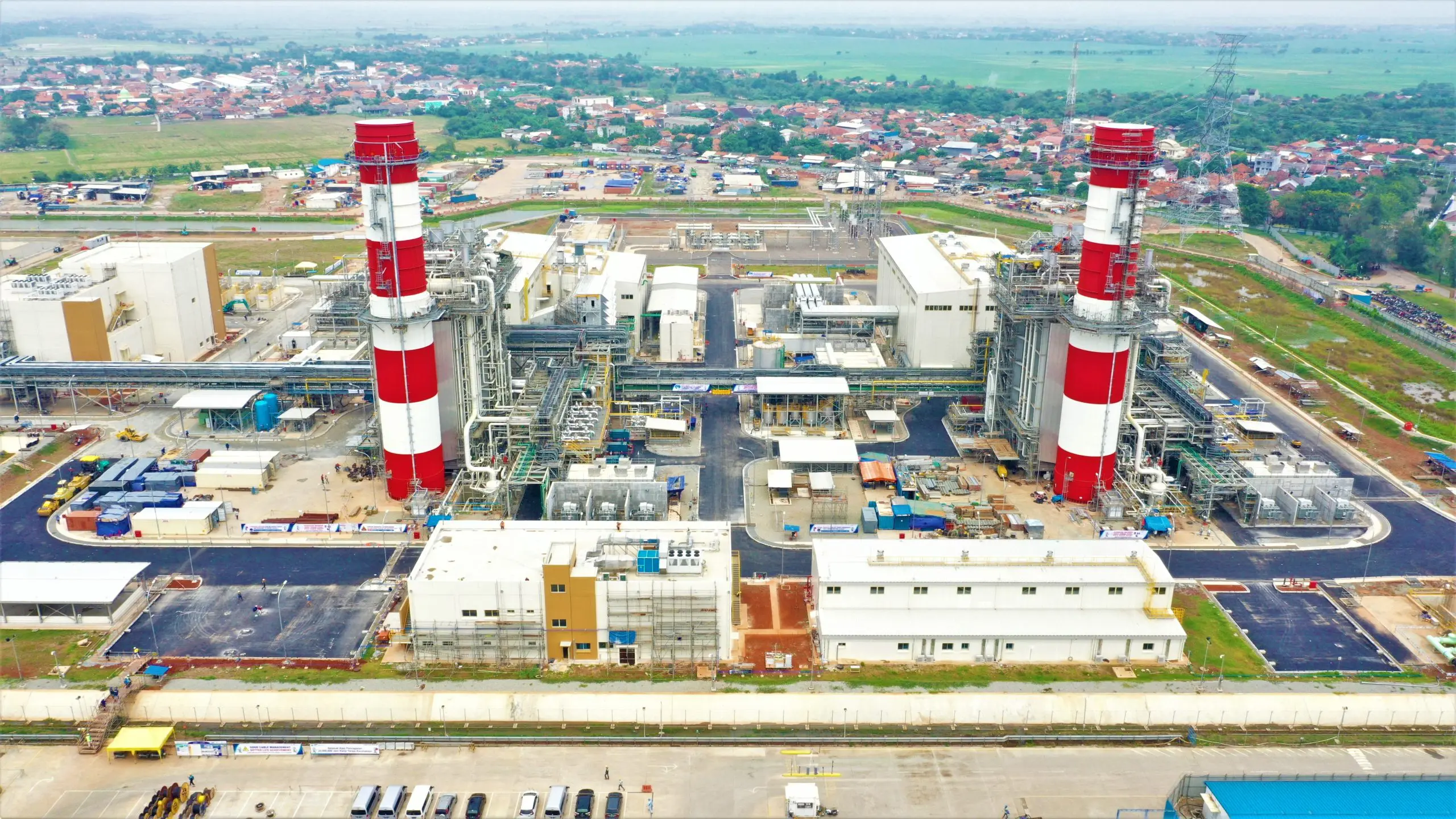
Indonesia’s Pertamina says that the Jawa-1 LNG-to-power project, which includes the 170,000-cbm Jawa Satu FSRU and a 1.76 GW power plant in the country’s West Java province, is ready to launch full operations.
According to a statement by state-owned Pertamina, the PLTGU Jawa-1 power plant is ready to operate at full capacity after passing a series of tests on March 29.
This is the largest integrated power plant in Southeast Asia equipped with a regasification system, it said.
The project is managed by Jawa Satu Power (JSP), which is owned by a consortium consisting of Pertamina New & Renewable Energy (Pertamina NRE) with a 40 percent ownership, while Japan’s Marubeni and Sojitz own 40 percent and 20 percent respectfully.
Also, Indonesian power producer PLN will take all of the electricity produced by the project as part of a long-term contract.
The plant consists of two units with a capacity of 880 MW each.
According to Pertamina, the second unit has been in commercial operation since December 2023.
By using LNG as a fuel, the resulting greenhouse gas emissions are lower than coal power plants, the firm said.
Pertamina said it expects the project to reduce carbon emissions by 3.3 million tco2e per year.
Jawa Satu FSRU
Back in February 2022, Pertamina said that the Jawa-1 PLTGU power plant had reached the first fire milestone at the first unit.
The firm said at the time that he largest gas-fired power plant in Southeast Asia was expected to “receive a commercial operation date (COD) this semester.”
Pertamina did not provide in the new statement the reasons behind the delay.
The power plant gets LNG from BP’s Tangguh facility in Indonesia’s Papua Barat province via the Jawa Satu FSRU.
In April 2021, the FSRU received its first commissioning cargo.
Moreover, the vessel works for Jawa Satu Regas, a joint venture consisting of Pertamina, Marubeni, Sojitz, and MOL.
MOL operates and maintains the unit with a 300 MMscfd regas capacity.
The FSRU sends regasified LNG to the power plant via some 21 km of gas pipelines located both offshore and onshore.