
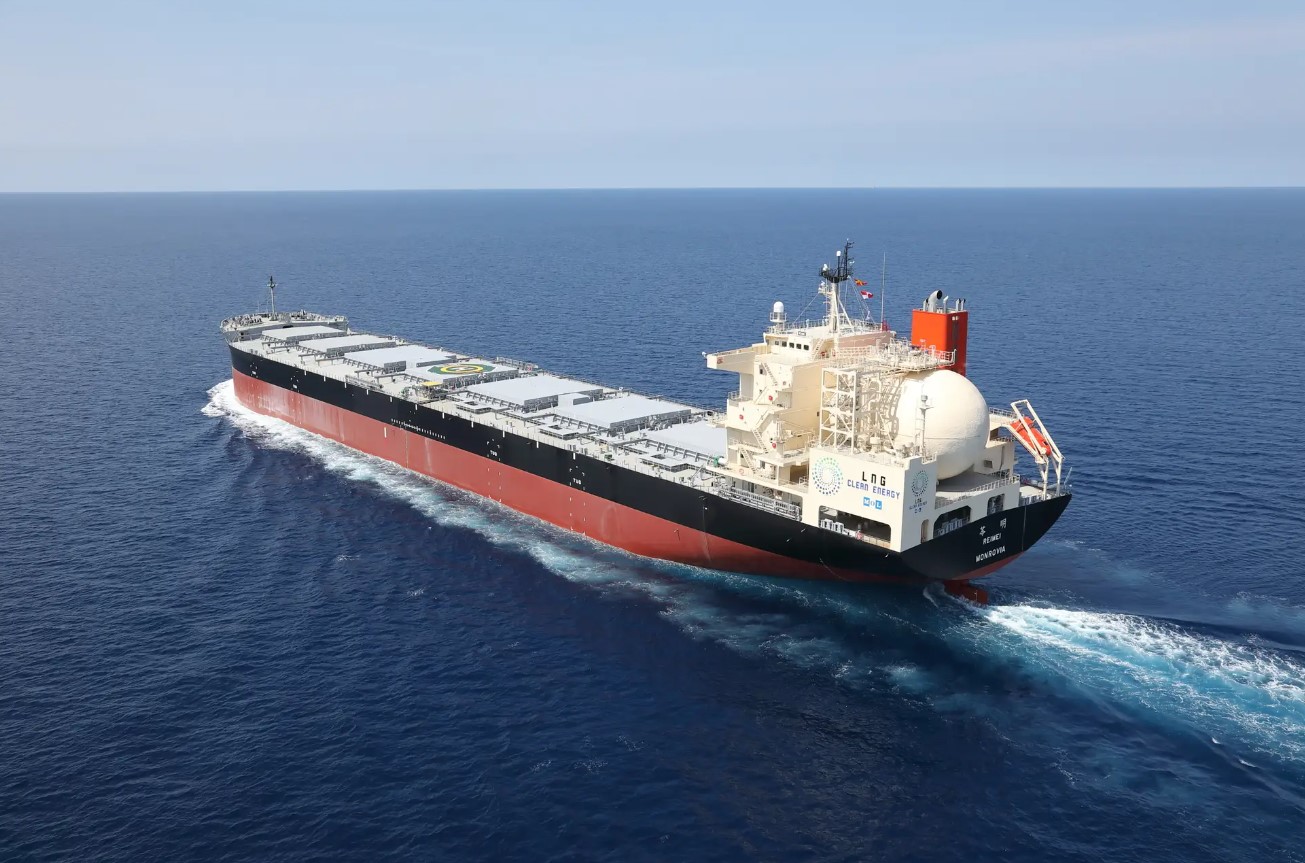
MOL’s LNG-powered Panamax-class bulk carrier, Reimei, has achieved a methane slip reduction rate of 98 percent, far exceeding the target of 70 percent, as part of demonstration trials which began in May 2025 on routes including between Japan and Australia, according to Japan’s MOL.
The Japanese shipping giant is working with Kanadevia and Yanmar Power Solutions to develop methane slip reduction technology under the green innovation fund project, development of next-neneration vessels, led by the New Energy and Industrial Technology Development Organization (NEDO).
The project, spanning six years from FY2021 to FY2026, aims to achieve a methane slip reduction rate of 70 percent or more for LNG-fueled vessels by combining methane oxidation catalysts with engine improvements.
MOL said its goal is to be the “first in the world to socially implement methane slip reduction technology in the maritime sector, a technology that has not yet been established even on land.”
“Thus far, the project has obtained, ahead of the rest of the world, verifying the achievement of a 93.8 percent methane slip reduction rate (at 100 percent load) in land-based trials, a certificate from Nippon Kaiji Kyokai (ClassNK),” the firm said.
Further trials
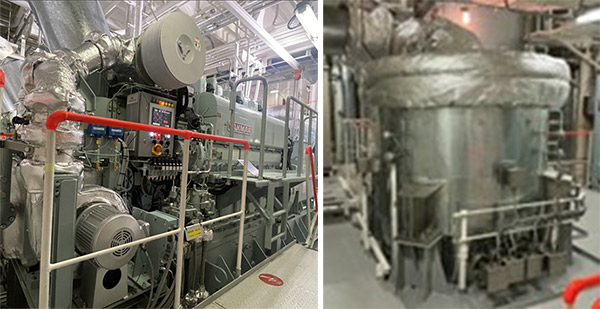
Based on these results, the three companies modified the land-based test equipment for onboard use and, starting in May 2025, began full-scale demonstration trials in sea areas including between Japan and Australia using the LNG-fueled large coal carrier, Reimei, operated by MOL.
MOL noted that in onboard trials, engines are operated under actual operating conditions, subject to constantly changing environmental factors in the engine room as well as fluctuations in load rate due to weather conditions.
“Even under these conditions, the system achieved a high reduction rate of 98 percent at the practical operating range (75 percent load), surpassing the land-based trial results,” MOL said.
“Going forward, onboard trials will continue through the end of FY2026 to evaluate overall system performance and catalyst durability, with the aim of social implementation from FY2027 onward,” MOL added.