This story requires a subscription
This includes a single user license.
Besides LNG shipments, the Ichthys project also sent 20 plant condensate cargoes, 27 offshore condensate cargoes, and 30 LPG cargoes in 2025, according to the Inpex fourth-quarter results presentation.
This compares to 20 plant condensate cargoes, 28 offshore condensate cargoes, and 30 LPG cargoes in 2024.
Inpex previously expected to ship a similar number of LNG cargoes in 2025 to 2024, but revised this in November last year due to extended planned maintenance.
“As for the reason for the lower number of cargoes than expected, at this point I can add that Train 2 was restarted at the beginning of November, and therefore behind the original schedule of early October,” a spokesman for Inpex told LNG Prime on Thursday.
“However, all maintenance has been completed, and Ichthys LNG has operated stably since,” he said.
In 2023, the LNG plant sent a record 129 LNG cargoes, 17 cargoes more compared to 2022, as part of the company’s plans to boost production to about 9.3 mtpa due to debottlenecking.
The plant shipped 11 LNG cargoes in 2018, 104 LNG cargoes in 2019, 122 LNG cargoes in 2020, 117 LNG cargoes in 2021, and 112 LNG cargoes in 2022.
120 cargoes
“For FY2026, we expect to ship an average of 10 LNG cargoes per month,” the spokesman said.
This is approximately 120 LNG cargoes, or eight cargoes more then in 2025.
“While there will be no large-scale maintenance shutdowns this year, we are expecting a planned, temporary shutdown and reduced operations in association with the commissioning of the booster compressor module on the CPF (central processing facility),” the spokesman said.
Ichthys LNG is a joint venture between operator Inpex and major partner TotalEnergies.
In 2024, Inpex also purchased a small stake in Ichthys LNG from compatriot Tokyo Gas to boost its stake from 66.245 percent to 67.82 percent.
Besides TotalEnergies, other partners in the Ichthys project include Australian units of CPC, Osaka Gas, Kansai Electric Power, Jera, and Toho Gas.
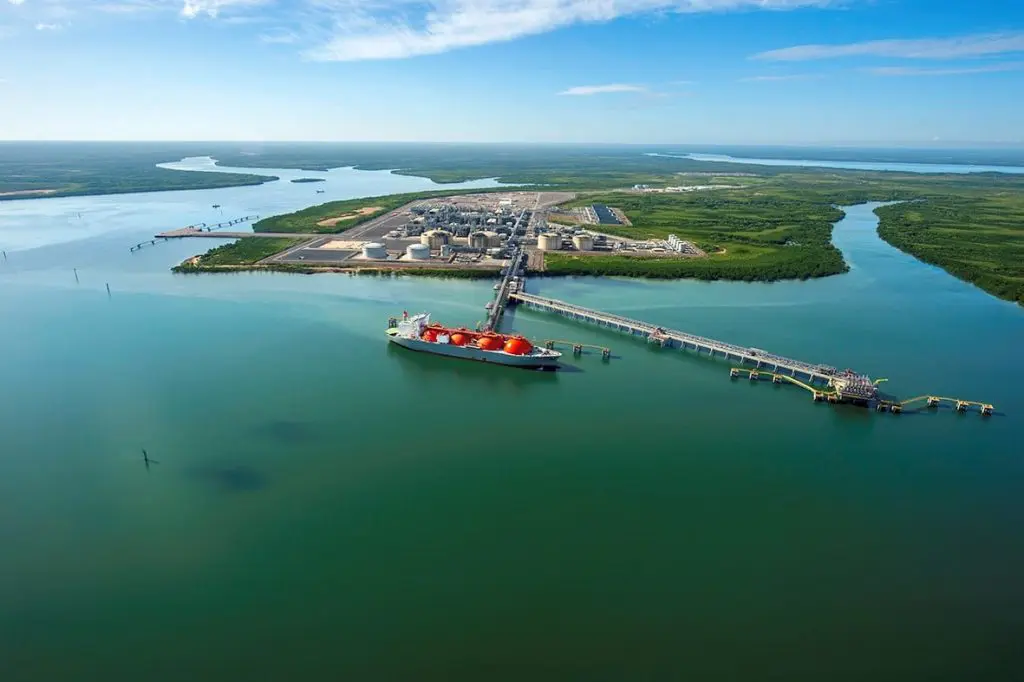
Natural gas arrives to the LNG plant at Bladin Point, near Darwin, from the giant Ichthys field offshore Western Australia via an 890-kilometer-long export pipeline.