
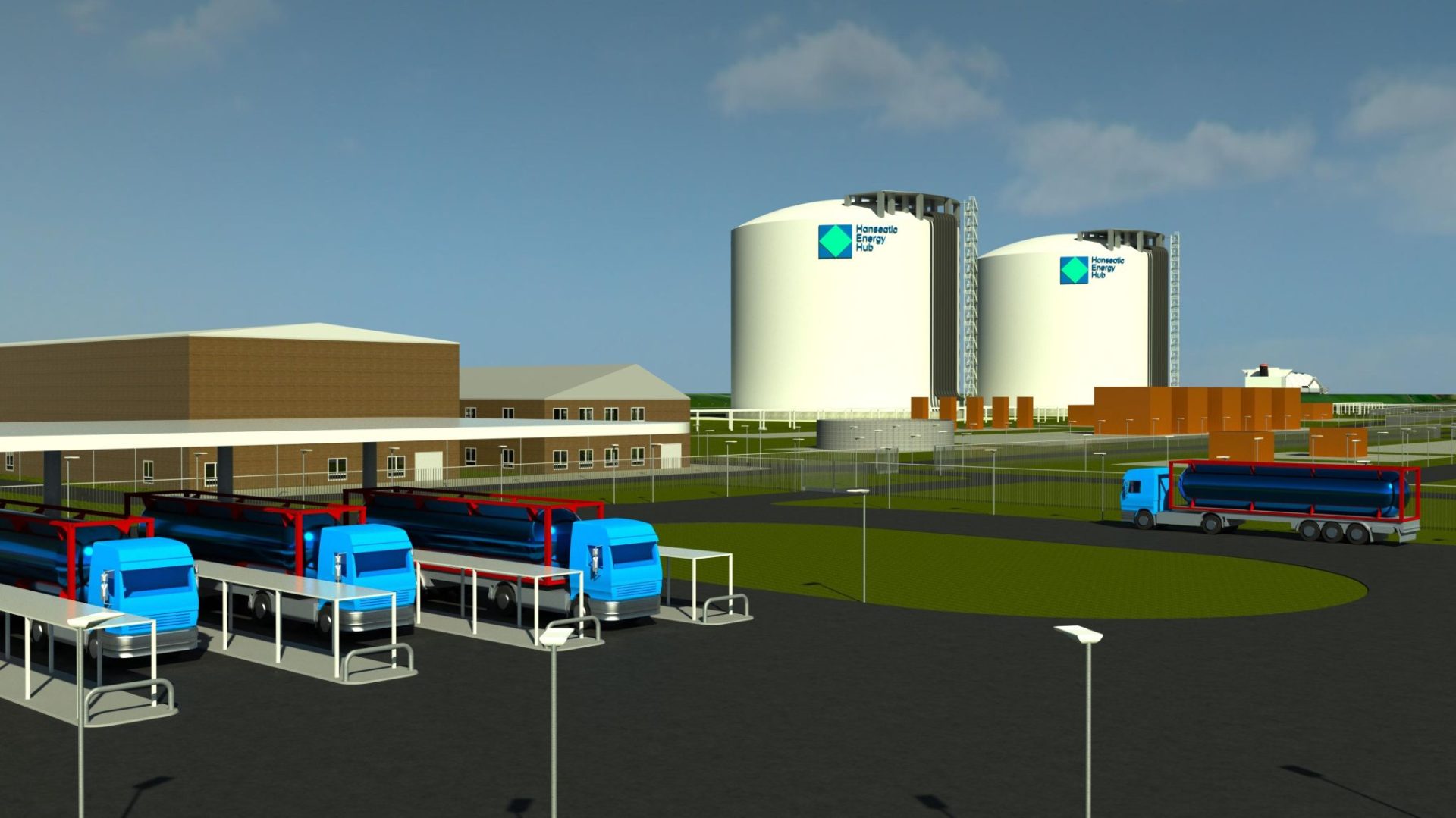
Germany’s Hanseatic Energy Hub, the developer of the Stade LNG import terminal near Hamburg, said market players have shown “great interest” to book capacity at the planned facility.
Last month, HEH invited international market participants to express their interest in booking long-term capacity in Stade from 2026 as it looks to accelerate the realization of the LNG import terminal with a capacity of 12 bcm per year.
HEH announced on Monday “very positive results” from its expression of interest process showing that the market has “great interest in capacity bookings at Stade.”
“What is needed now is a swift translation of the political signals in Germany into concrete measures: accelerated approval processes, flexible and swift procedures at BNetzA and, above all, equal treatment of all LNG projects,” the firm said.
HEH did not provide any additional information.
Germany plans several LNG import facilities
Germany currently has no large LNG import terminals but there are several facilities on the table including proposals from German LNG Terminal and Uniper, which received backing by the government.
Uniper and RWE are also finalizing talks to secure three floating storage and regasification units (FSRUs) for Germany as the country looks to ditch Russian gas supplies.
Last month, Germany’s HEH received approval from the local government for the planned Stade facility and signed a memorandum of understanding with German energy firm EnBW for capacity booking.
Current HEH partners include Germany’s Buss Group, Switzerland’s Partners Group, and Belgium’s Fluxys.
With its planned regasification capacity of 12 bcm per year, the LNG terminal in Stade would be able to cover about ten percent of Germany’s gas demand, according to HEH.
Located on the Elbe river within the Dow industrial park, the hub would initially handle LNG and low-carbon energy carriers such as bio-LNG and synthetic methane.
The concept also includes a truck loading facility and a jetty for bunkering vessels.
As global supply grows, it would later also be available for the import of “climate-neutral” energy sources such as ammonia, HEH previously said.