
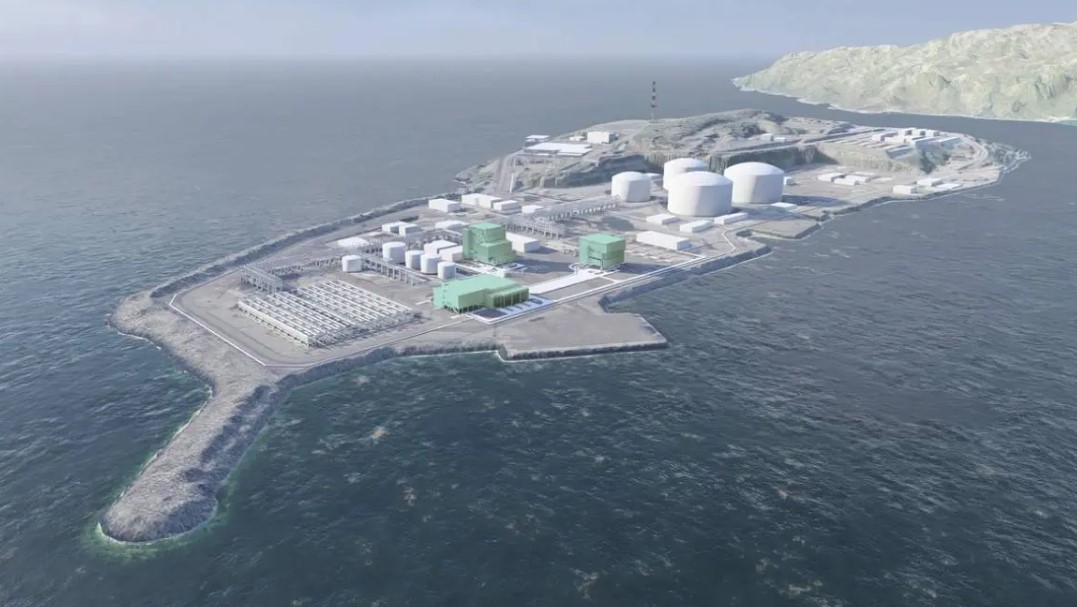
Norway’s Equinor and its partners in the 4.3 mtpa Hammerfest LNG export plant have received an approval to upgrade the facility located on Melkoya island.
Equinor said in a statement on Tuesday that the Norwegian government has approved the Snohvit partners’ plans for the future operation of Snohvit and Hammerfest LNG, subject to certain conditions.
Also, the approval includes onshore compression from 2028, and electrification of the plant from 2030.
The Norwegian firm and its partners said in December they would invest 13.2 billion Norwegian krone ($1.3 billion) to upgrade the facility located on Melkoya island.
Hammerfest LNG liquefies natural gas coming from the Snohvit field in the Barents Sea.
Gas reaches Hammerfest LNG via a 160-kilometer gas pipeline which became operational in the autumn of 2007.
Equinor is the operator of both the Snohvit field and Hammerfest LNG with a 36.8 percent stake.
Other license owners of Snohvit are Petoro (30 percent), TotalEnergies EP Norge (18.4 percent), Neptune Energy Norge (12 percent), and Wintershall Dea Norge (2.81 percent).
Start of electrification pushed back
Compared to the partnership’s application, the authorities have postponed the start of electrification by two years, from 2028 to 2030, Equinor said.
The plant will continue to run on gas turbines during this period.
According to the firm, the approval opens for maintaining the gas turbines for back-up power from 2030 to 2033, while the need for this will be assessed by 2028 at the latest.
Equinor said that electrification of Hammerfest LNG will replace today’s gas turbines with electricity from the grid.
Moreover, this reduces CO2 emissions from the plant by around 850,000 tonnes annually, Equinor said, adding that this is the most substantial individual emission reduction decision that has been made aimed at decarbonizing oil and gas production in Norway.
“The Snohvit owners are pleased that the government has now approved Snohvit Future, a project that will strengthen Norway’s position as a reliable, long-term supplier of gas produced with very low greenhouse gas emissions,” Geir Tungesvik, Equinor’s executive vice president for projects, drilling, and procurement said in the statement.
“The project ensures long-term operation and export from Melkoya towards 2050. We fully understand that there have been many factors to consider, and we will recommend the partnership to meet the conditions for the authorities’ approval,” he said.