
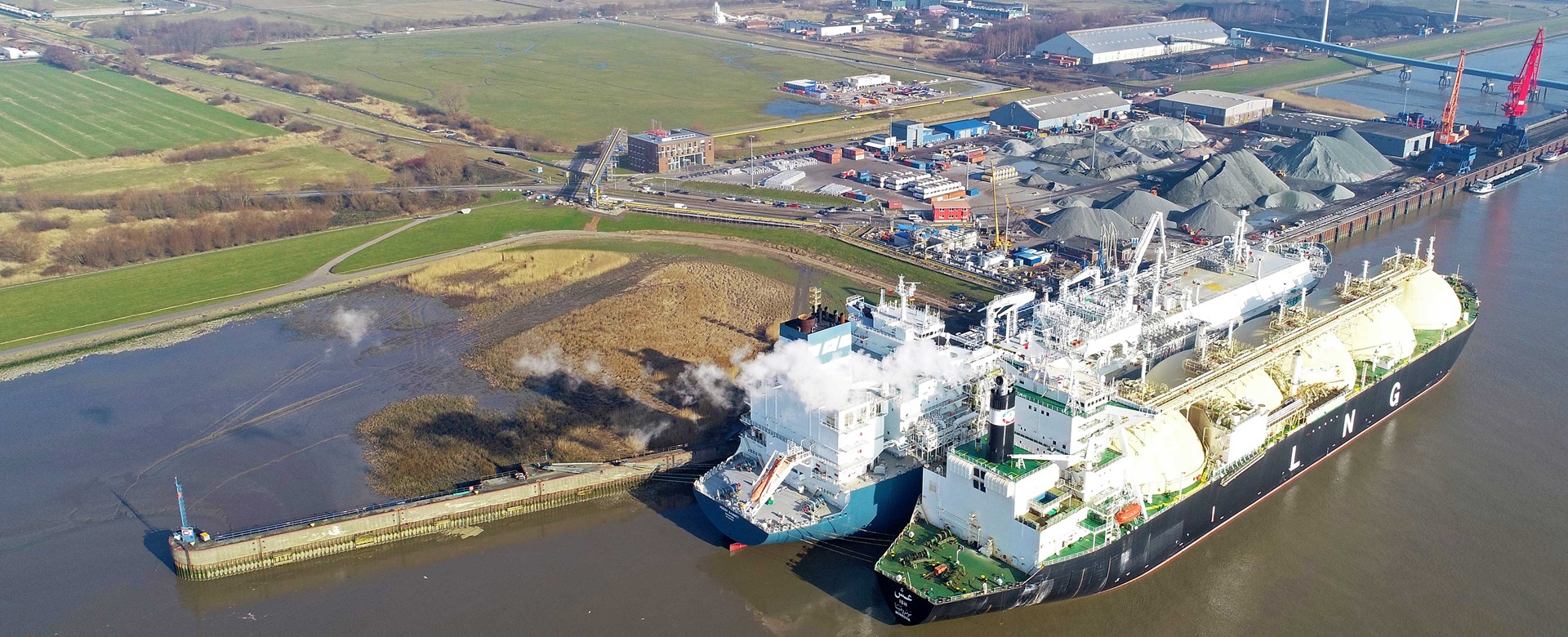
German energy firm RWE expects the 170,000-cbm FSRU Hoegh Gannet, which serves the Elbehafen LNG import terminal in Brunsbuettel, to start supplying small quantities of natural gas to the grid next week.
The FSRU, which the German government chartered from Hoegh LNG, returned to its location in Brunsbuettel after RWE moved the vessel earlier this month due to complaints by local residents on loud noise coming from the unit.
Prior to this, the FSRU-based terminal, Germany’s third such facility, received its first LNG tanker on February 14 from UAE’s Adnoc.
Hoegh Gannet will initially operate at the Brunsbuettel Port’s existing dangerous goods berth.
From the end of 2023, the FSRU will work from a new jetty to the west of the Elbehafen and Brunsbuettel Ports will build and operate this jetty.
LPG and LNG unloading
A spokesman for RWE told LNG Prime on Thursday that the onshore technical infrastructure, including hot water supply, will be completed on March 17.
“Next weekend, the first unloading of liquefied petroleum gas (LPG) for an existing customer of Brunsbuettel Ports will take place across the Hoegh Gannet according to the ship-to-ship principle,” he said.
Previously, the partners planned that the initial regasification and subsequent test phase to take place in parallel with the LPG discharge.
“Because the simultaneous commissioning of LPG unloading and LNG regasification is a very complex procedure, RWE, ship operator Hoegh, and gas grid operator Gasunie have jointly decided to complete the LPG unloading first,” the spokesman said.
“On Monday, March 20, Gasunie will fill the last section of the pipeline connecting to the FSRU with gas so that the first regasification can then begin,” he said.
Launch of ops still expected in March
The spokesman confirmed that RWE still expects the FSRU to be in “regular operation” from the end of March.
It is not yet clear when the next cargo would arrive at the unit.
The Elbehafen LNG terminal will become the third operational FSRU-based terminal in Germany and the second out of five backed by the German government after the Wilhelmshaven facility.
In January, Deutsche Regas officially launched its FSRU-based LNG import terminal in Lubmin, Germany’s second such facility and the first private terminal.
New state-owned firm Deutsche Energy Terminal GmbH will operate the five government-backed FSRUs.