
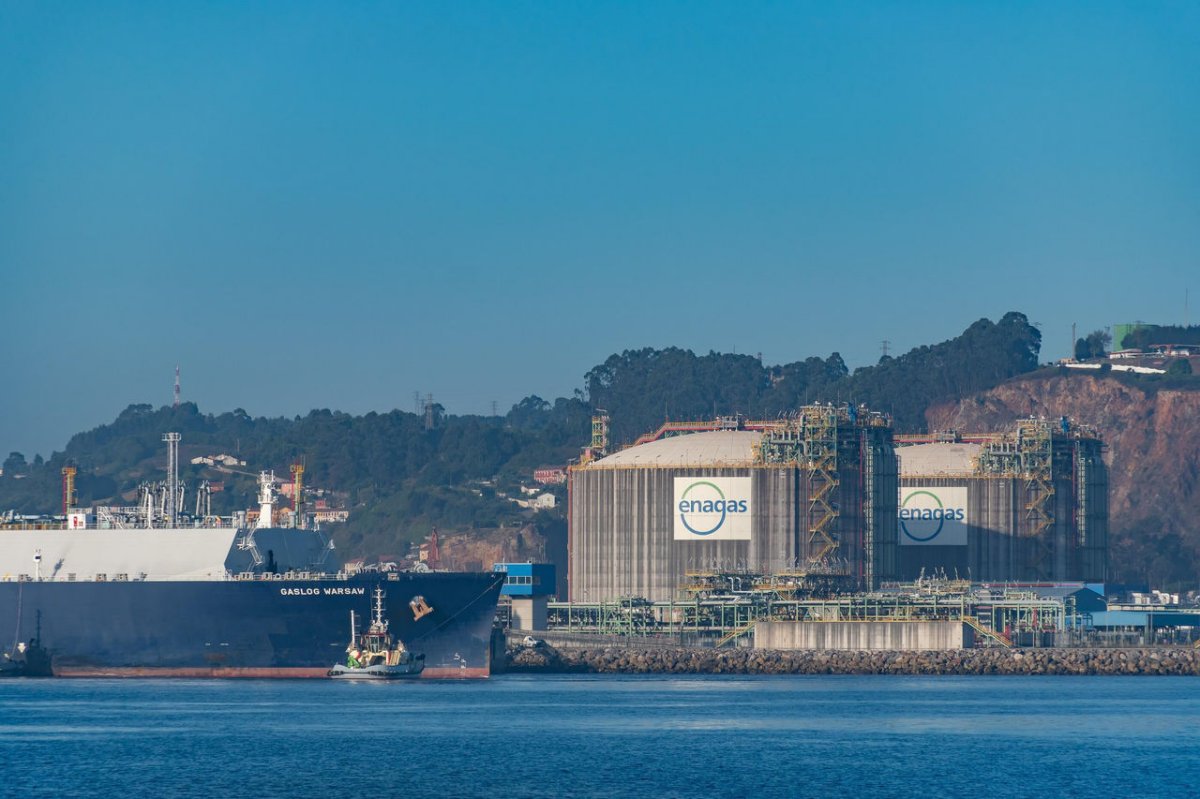
Spanish liquefied natural gas (LNG) imports and reloads declined in August compared to the same month last year, according to Enagas.
LNG imports dropped by 7.3 percent to about 22.3 TWh in August and accounted for 69.1 percent of the total gas imports. In July, LNG imports reached some 20.5 TWh.
Including pipeline imports from Algeria, France, and Portugal, gas imports to Spain reached about 33.8 TWh last month, a drop from some 38 TWh in August last year, Enagas said in its monthly report.
Moreover, national gas demand in August dropped by 11.6 percent year-on-year to some 25 TWh.
Demand for power generation declined by 37.2 percent year-on-year to about 10.4 TWh last month, while conventional demand rose by 24.8 percent to 14.6 TWh, the LNG terminal operator said.
Enagas operates a large network of gas pipelines and has four LNG import plants in Barcelona, Huelva, Cartagena, and Gijon.
It also owns 50 percent of the BBG regasification plant in Bilbao and 72.5 percent of the Sagunto plant, while Reganosa operates the Mugardos plant.
Last month, Spanish power group Endesa delivered the first commercial cargo to the El Musel LNG terminal in Gijon.
Enagas awarded the logistics services contract to Endesa in July.
US biggest LNG supplier
The seven operational Spanish LNG regasification terminals, including El Musel, unloaded 25 cargoes last month, the same number of cargoes compared to August 2022, according to Enagas.
The US regained the title of the biggest LNG supplier to Spain last month after Russia was the biggest supplier for three months in a row.
Spanish LNG terminals received 10.89 TWh from the US in August, a rise from 10 TWh last year. US volumes accounted for 32.2 percent of all of the Spanish gas imports in August, the data shows.
Nigerian LNG volumes to Spain rose from 5.83 TWh in August 2022 to 6.85 TWh last month, while Russian volumes dropped from 4.50 TWh to 3.32 TWh last month.
Other LNG sources in August include Qatar and Algeria, the data shows.
LNG reloads drop
Spanish LNG terminals loaded about 2.25 TWh in August, down 52 percent compared to some 4.65 TWh in August 2022 but up compared to 0.38 TWh in July.
The Cartagena LNG terminal reloaded about 1.13 TWh of LNG, followed by the Sagunto terminal with about 0.90 TWh.
On the other hand, the number of truck loads at the LNG terminals rose by 21.4 percent year-on-year to 896, the data shows.
The Huelva LNG terminal completed 270 truck loads in August, followed by Barcelona with 154 truck loads, and Sagunto with 153 truck loads.