
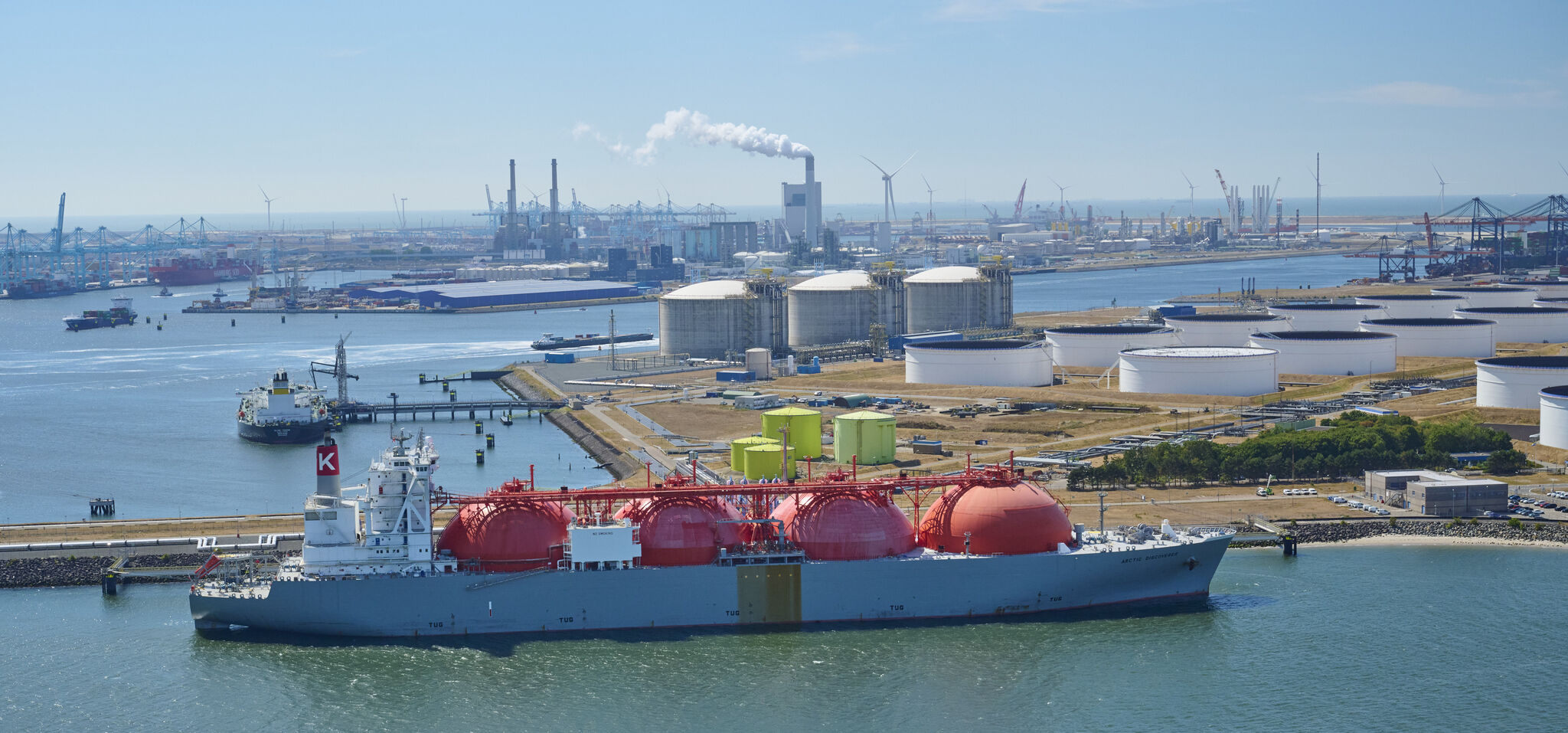
Dutch Gate terminal in the Rotterdam port, one of Europe’s main LNG hubs, said it had resolved minor issues with its gas sendout to the grid.
The terminal operator owned by Gasunie and Vopak said on December 5 that the “maximum terminal sendout is reduced by 990 MWh/h until further notice” due to operational difficulties.
“The availability of the interruptible sendout services will be fully restored from December 14, 06:00 hours CET,” Gate said in a update.
Gate did not provide in the update any additional information on what caused the curtailment or what the terminal operator had done to resolve the operational difficulties.
LNG Prime asked Gate’s commercial manager, Stefaan Adriaens, to provide more information regarding the matter.
“We managed to restore the full warm water supply to Gate,” he said.
Adriaens previously told us that the curtailment had affected only part of the interruptible sendout services.
According to Adriaens, this curtailment equaled to about five percent of the recent sendout from the terminal to the grid.
“We are typically sending out 20,000-21,000 MWh/h,” he said.
Dutch LNG import capacity on the rise
Gate has a capacity of 12 bcm or 8.8 mtpa of LNG. It also has three LNG storage tanks with a capacity of 540,000 cbm, and three truck loading bays.
Following modifications and investments, Gate managed to add 4 bcm of capacity on an interruptible basis, it said in July.
Gate also received a permit to add the fourth tank and boost regasification capacity up to 20 bcm per year.
The LNG terminal substantially increased its incoming volumes of LNG this year as the Netherlands and other European countries such as Germany work on replacing Russian pipeline gas supplies.
In that regard, Gate’s shareholder Gasunie also launched the FSRU-based facility in Eemshaven. This LNG hub should reach its full capacity of 8 bcm by January.
In addition to these facilities, Gasunie is planning to further boost Dutch LNG import capacity. The plans include a new FSRU-based facility in the port of Terneuzen.