This story requires a subscription
This includes a single user license.
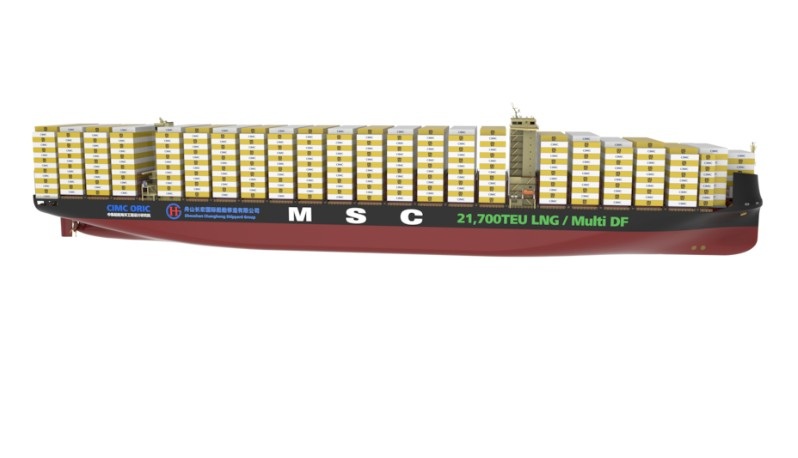
DNV said in a statement on Tuesday that the proposed 21,700-teu container ship design enables the shipyard to accommodate an owner’s varying preferences for alternative fuels.
In addition to the widely utilized LNG engines, different engine technologies, including the latest generation of ammonia-fueled main engines are now available to be integrated into the design.
DNV noted that a major challenge is the tank system, as no combined solution exists for storing both LNG and ammonia in the required quantities.
This challenge was addressed by developing an oversized, specialized pype C tank for ammonia, positioned between the commonly used type B/C or membrane LNG tank technologies, according to the classification society.
Moreover, the hull design, with a new vertical bow, optimized stern, and hull lines, alongside low-resistance coatings, high-efficiency propellers, and energy-saving hydrodynamic features, targets improved fuel efficiency, with validation through CFD simulations and model tests, it said.
MSC is one of the world’s largest backers of LNG as fuel.
Zhoushan Changhong previously said that MSC has 36 LNG dual-fuel vessels on order at the yard.
“We are pleased to support Zhoushan Changhong International and CIMC ORIC with our extensive experience in LNG dual-fuel vessels as they expand their product portfolio to include a broader range of alternative fuels,” Giuseppe Gargiulo, MSC’s head of newbuildings said.
“Although LNG remains the most proven fuel for MSC to operate container ships at this time, the insights gained from this joint project will also help drive innovation for future efficient dual-fuel powered container ships and allow MSC to follow future options and be open for other technologies,” Gargulo said.