This story requires a subscription
This includes a single user license.
Last year, Cedar LNG Partners filed an application with British Columbia’s Environmental Assessment Office (EAO) to make changes to its plans for the LNG project, a floating liquefied natural gas facility and marine export terminal in Kitimat.
British Columbia’s environmental regulator said in a recent statement that it has approved changes and amended the environmental assessment certificate for Cedar LNG.
The environmental assessment certificate was originally issued in 2023, which approved the project to proceed.
The certificate has been amended to allow Cedar LNG to accommodate up to 80 workers on the floating LNG facility and to increase the liquefaction capacity from 400 to 500 million standard cubic feet of natural gas per day.
“The EAO considered the nature of the proposed physical changes to the project, the potential for these changes to cause new impacts on the environment and First Nations rights and interests. The EAO concluded that the amendment would not result in significant adverse effects,” the statement said.
The proposed changes will also require an amendment of the impact assessment act decision statement, and approvals from the BC Energy Regulator.
FLNG launched
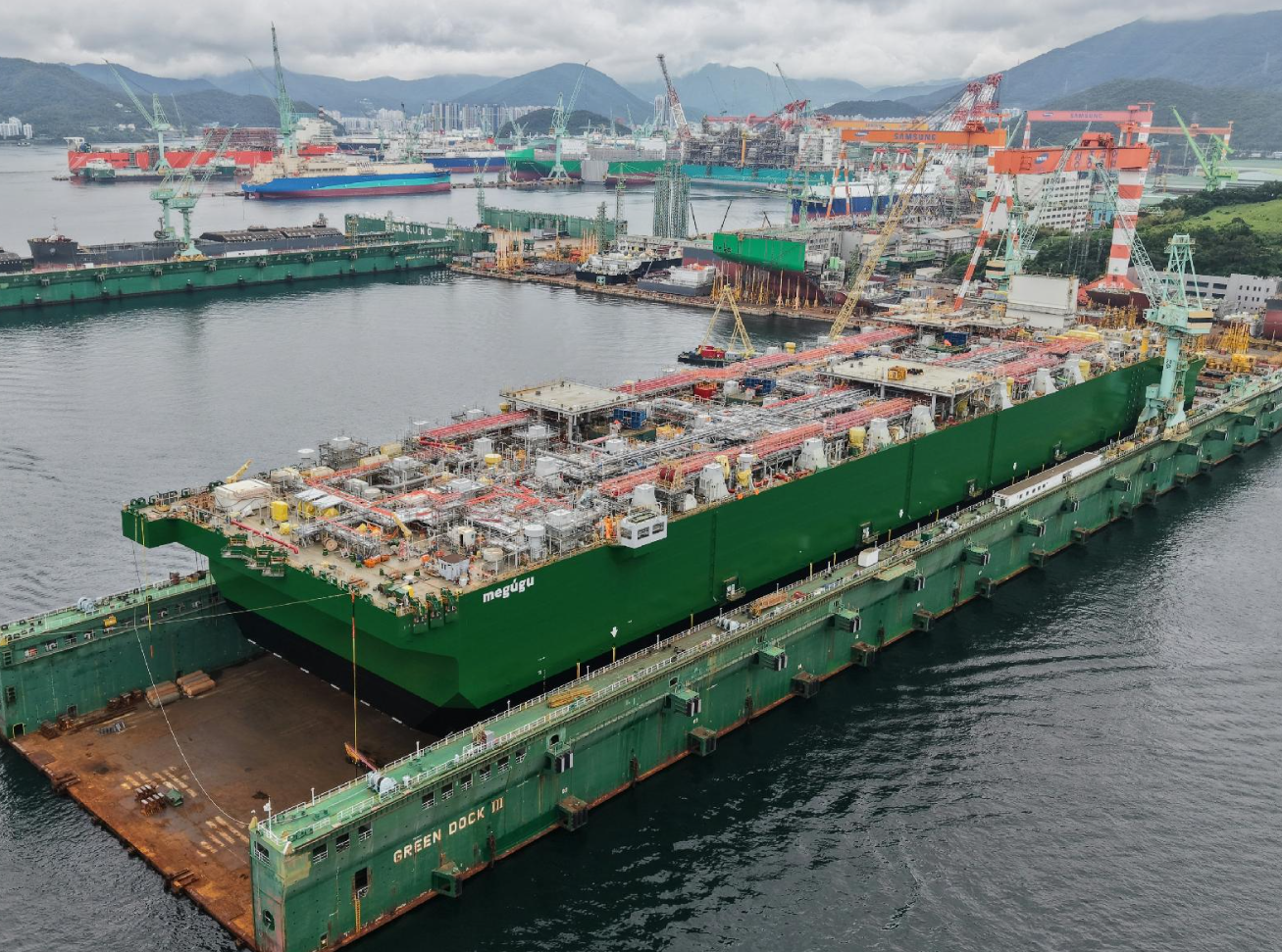
Last month, South Korea’s Samsung Heavy Industries launched Cedar LNG’s floating LNG production unit
The shipbuilder aims to complete commissioning and deliver the FLNG with a nameplate capacity of 3.3 mtpa in the first half of 2028.
In June last year, Samsung Heavy officially started building Cedar’s FLNG.
Cedar LNG issued a notice to proceed to Samsung Heavy and Black & Veatch for its FLNG following the finalization of long-term commercial offtake agreements.
Samsung Heavy is responsible for the hull of the FLNG and topside plant processes, while Black & Veatch will provide its PRICO technology.
The $4 billion Cedar LNG project remains on time and on budget, with an expected in-service date in late 2028, Pembina’s management said in a business update in April.
The Haisla Nation has a 50.1 percent stake while Pembina owns 49.9 percent in the project located in the traditional territory of the Haisla Nation.