
German LNG terminal operator Deutsche ReGas expects to launch full operations at its Mukran LNG import facility, which will consist of two floating storage and regasification units, on July 1.
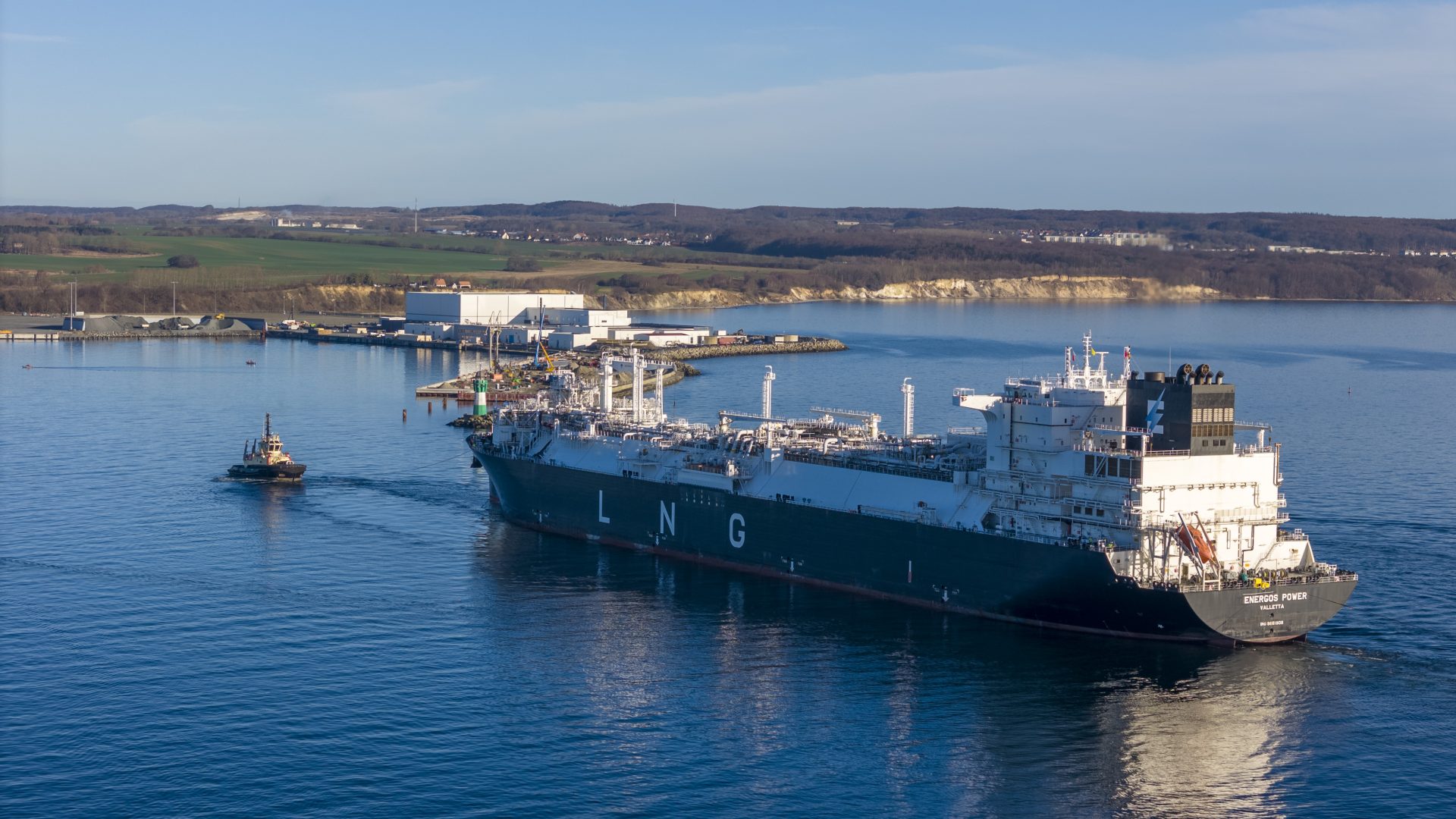
Currently, the terminal features the 2021-built 174,000-cbm, Energos Power, owned by US-based Energos Infrastructure.
In June last year, Deutsche ReGas signed a deal with the German government to sub-charter the FSRU delivered in 2021 by Hudong-Zhonghua. Deutsche ReGas took over the charter of Energos Power in October last year.
Moreover, Deutsche ReGas received the first LNG tanker at the Mukran facility in March as part of the commissioning phase, and in April it received an operating permit for the facility.
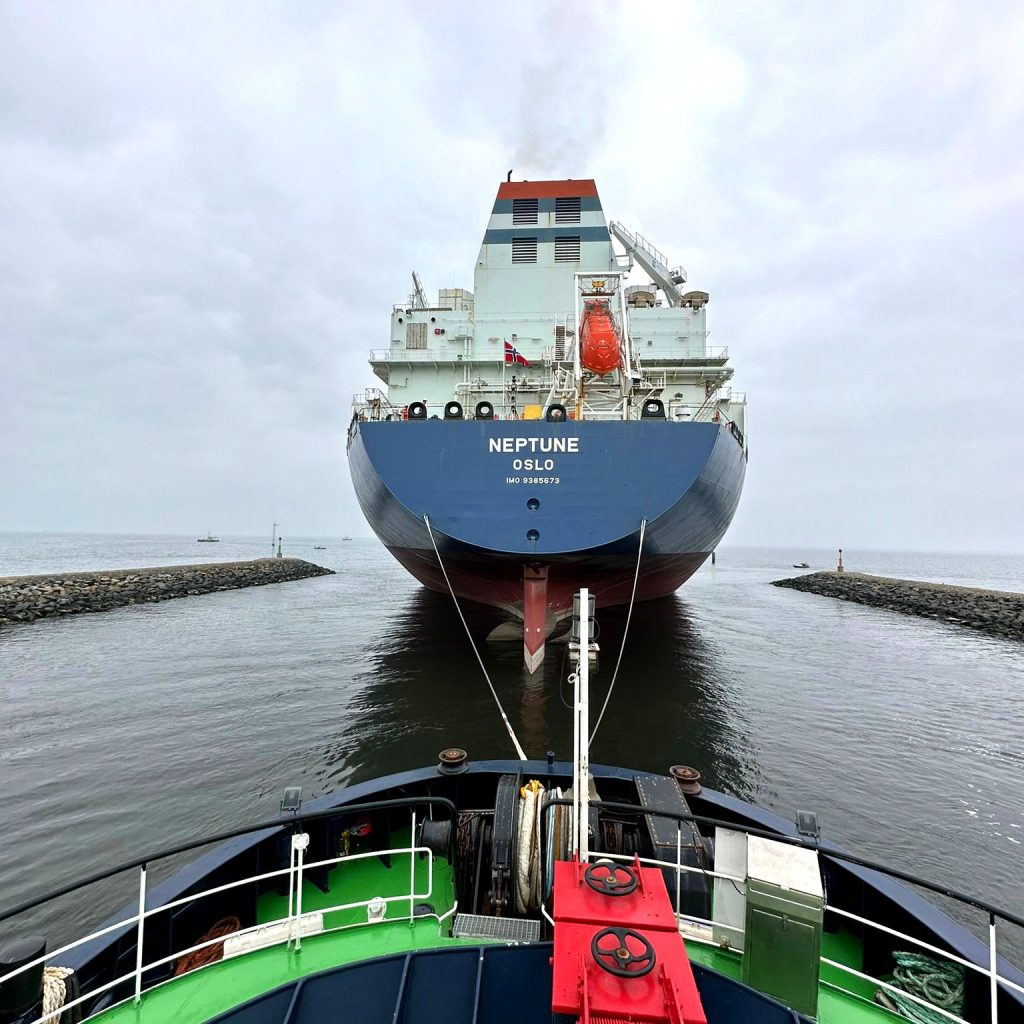
Energos Power will be soon joined by the 2009-built 145,000-cbm, FSRU Neptune, which is 50 percent owned by Hoegh LNG and sub-chartered by Deutsche ReGas from TotalEnergies.
Last month, the 2009-built 145,000-cbm, FSRU Neptune, left Germany’s industrial port of Lubmin, where it served the Lubmin terminal.
Deutsche ReGas officially launched its Lubmin FSRU-based LNG import terminal, first private LNG terminal in Germany, in January last year.
After leaving Lumbin, Neptune was located for about a month at Fayard, in Denmark’s Odense port, to complete preparational work prior to its deployment at the new “Deutsche Ostsee” terminal in the industrial port of Mukran.
According to its AIS data provided by VesselsValue, the FSRU left the yard during the weekend and was on Tuesday heading to Skagen, Denmark.
“The terminal is expected to be fully operational on July 1, 2024 once the second FSRU Neptune arrives in Mukran,” Deutsche ReGas said in a document on June 16 providing more details on its recently announced capacity auctions from 2024 to 2027.
Up to 13.5 bcm per year
The FSRUs will be located side-by-side at the berth 12 in the Mukran port, as part of the second phase of the FSRU-based LNG terminal with a capacity of up to 13.5 bcm per year.
Besides the FSRUs, the Mukran terminal includes the 50-kilometer-long pipeline Ostsee Anbindungsleitung (OAL).
Germany’s Gascade built this pipeline which connects the LNG terminal in the port of Mukran with the German gas transmission network in Lubmin.
Belgium’s Fluxys recently bought a 25 percent stake in this pipeline.
The terminal is connected to the pipeline via the entry point named the Baltic Energy Gate
(BEG).
Deutsche ReGas said the terminal has been designed for a nominal sendout rate of 1,254,000 MMBtu/d, while net LNG tank capacity of the terminal is 310,000 cbm.
This allows for up to 3 cargoes to be simultaneously regasified at any given time creating a sendout profile of 9 days for the terminal users, the firm said.
Each FSRU is equipped with 3 x 250 mmscf/d regasification units and the regasification is operated under an n+1 philosophy, Deutsche ReGas said.
The firm said that 3 regasification units will operate in open, combined or closed loop, while 3 regasification units will operate closed loop.
Gas will flow to shore is managed via 2 separate HP gas loading arms ensuring that each FSRU’s regasification operations are fully independent of each other creating redundancy, Deutsche ReGas said.