
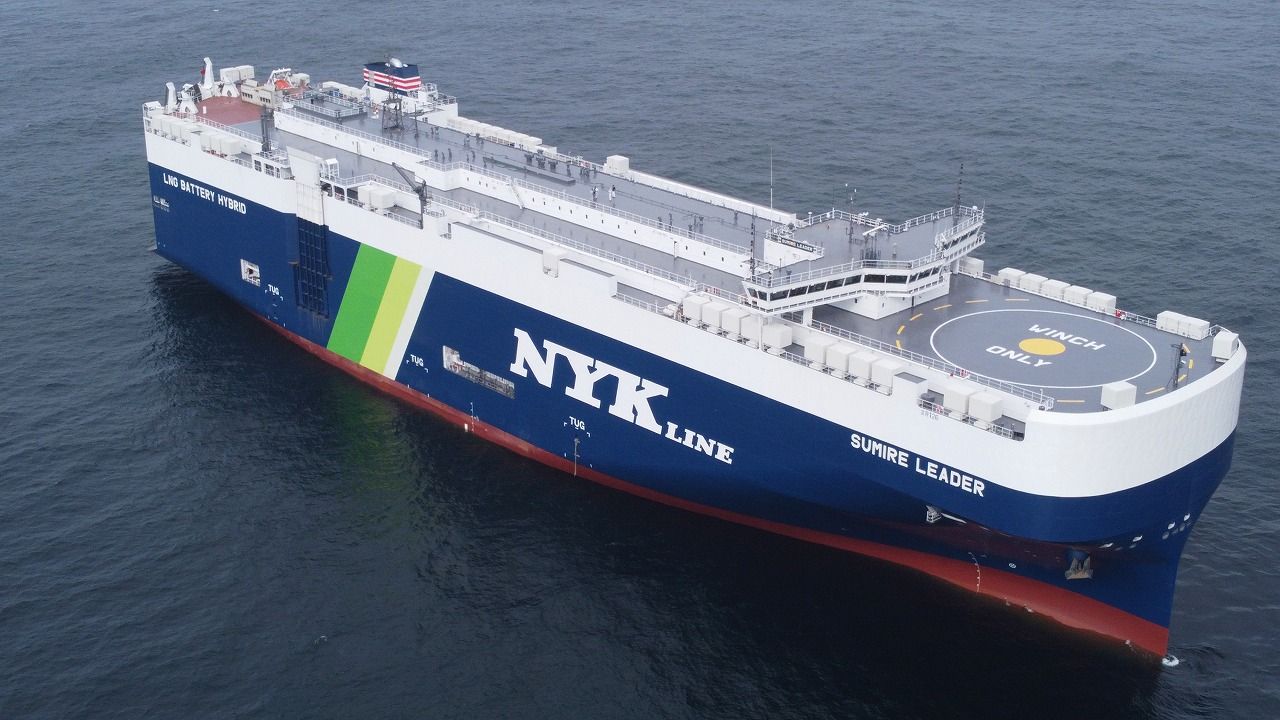
Classification society DNV has added six LNG-powered ships and 14 methanol-fueled vessels to its Alternative Fuels Insight platform in October.
Besides these six orders for LNG-powered vessels in October, South Korea’s Hyundai Glovis has revealed plans to order 12 LNG dual-fuel car carriers, said to be world’s largest PCTCs, worth about $1.84 billion.
DNV reported orders for eight LNG-powered ships in September, 21 vessels in August, and 14 vessels in July, while in June there were orders for 26 LNG-powered ships, the highest monthly number of vessels this year.
The January-May period of this year was slow for LNG-powered newbuild orders after a record 2022 with 222 orders.
In January, DNV reported no orders for LNG-powered vessels, while there were 10 LNG dual-fuel ships ordered in February, eight in March, 10 in April, and seven in May.
After a record month for methanol orders in July with 48 vessels, August saw no new orders, and there were 12 new orders in September.
“We counted 14 orders for methanol-fueled ships, this time spread across all main deep sea ship segments,” Martin Wold, principal consultant in DNV’s maritime advisory business, said.
Wold also said there was a breakthrough for ammonia in October, with the first firm order for two ocean going vessels with ammonia dual-fuel.
These are the two midsize gas carriers ordered by Exmar LPG, a joint venture consisting of Exmar and Seapeak, in South Korea.
448 LNG-powered ships in operation
DNV’s platform shows that there are now 448 LNG-powered ships in operation, while owners placed orders for 536 LNG-fueled vessels.
LNG-powered crude oil tankers lead the way with 71 in operation, followed by 64 containerships, 49 oil/chemical tankers, and 43 car and passenger ferries.
As per vessels on order, LNG-powered containerships account for a big part of the orders with 200 units. Shipping firms also ordered 139 car carriers, 49 oil and chemical tankers, 38 crude oil tankers, and 33 bulk carriers.
These statistics do not include smaller inland vessels or dual-fuel LNG carriers.
50 LNG bunkering vessels and 195 LPG-powered ships
Besides LNG-powered vessels, there are 50 LNG bunkering vessels in operation and 16 on order, the platform shows.
In addition to 984 confirmed LNG-powered ships, the fleet powered by alternative fuels also includes 230 methanol-fueled vessels, 201 LPG-powered ships, and 29 hydrogen-fueled vessels, according to the platform.