
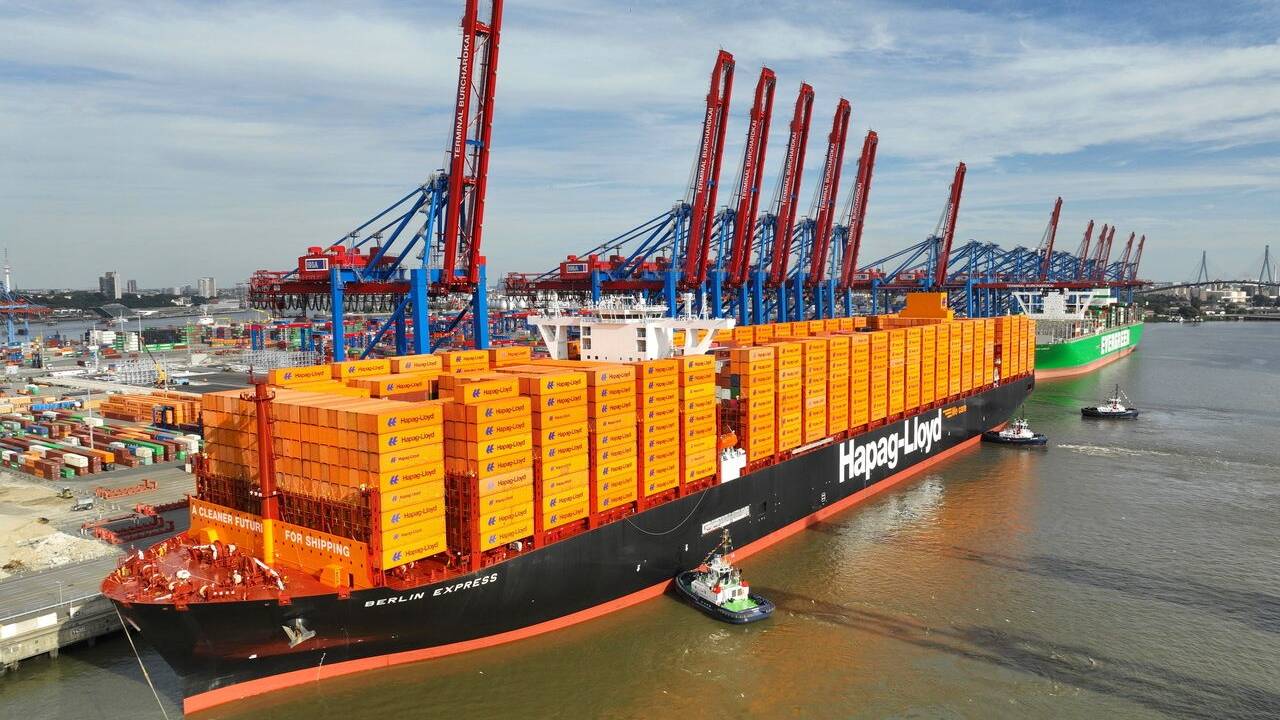
Classification society DNV has added eight LNG-powered ships to its Alternative Fuels Insight platform in September, 13 ships less compared to the previous month.
DNV reported orders for 21 LNG-powered ships in August and 14 vessels in July, while in June there were orders for 26 LNG-powered ships, the highest monthly number of vessels this year.
The January-May period of this year was slow for LNG-powered newbuild orders after a record 2022 with 222 orders.
In January, DNV reported no orders for LNG-powered vessels, while there were 10 LNG dual-fuel ships ordered in February, 8 in March, 10 in April, and 7 in May.
After a record month for methanol orders in July with 48 vessels, August saw no new orders.
However, things picked up again in September with 12 new methanol vessels in the orderbook, DNV said.
LNG containerships represent the larger share of newbuilds in August and September with car carriers and tankers not far behind.
For methanol, the container segment continues to be dominant. However, the first methanol fueled VLCC has been ordered as well as a few orders for methanol-fueled bulk carriers, DNV said.
Martin Wold, principal consultant in DNV’s maritime advisory business, said that DNV sees “a continuing growth of vessel orders with a strong pipeline for both LNG and methanol.”
“In addition, the interest in ammonia keeps building. Even if we have yet to see the first firm order for a seagoing ammonia-fueled ship there is no doubt the interest keeps increasing, and the first order is inching closer,” he said.
438 LNG-powered ships in operation
DNV’s platform shows that there are now 438 LNG-powered ships in operation, while owners placed orders for 540 LNG-fueled vessels.
LNG-powered crude oil tankers lead the way with 68 in operation, followed by 60 containerships, 48 oil/chemical tankers, and 43 car and passenger ferries.
As per vessels on order, LNG-powered containerships account for a big part of the orders with 204 units. Shipping firms also ordered 139 car carriers, 48 oil and chemical tankers, 39 crude oil tankers, and 35 bulk carriers.
These statistics do not include smaller inland vessels or dual-fuel LNG carriers.
47 LNG bunkering vessels and 195 LPG-powered ships
Besides LNG-powered vessels, there are 47 LNG bunkering vessels in operation and 18 on order, the platform shows.
In addition to 978 confirmed LNG-powered ships, the fleet powered by alternative fuels also includes 216 methanol-fueled vessels, 199 LPG-powered ships, and 28 hydrogen-fueled vessels, according to the platform.