This story requires a subscription
This includes a single user license.
The government of Canada, the government of British Columbia, and LNG Canada reached an agreement on Thursday on enhanced investment co-operation and actions to collectively progress closure of final items to support a potential 2026 FID of LNG Canada’s proposed Phase 2 expansion, according to a statement by LNG Canada.
This agreement follows a decision on May 1, 2026, by LNG Canada’s JV participants to approve hundreds of millions of dollars in incremental funding to help finalize critical work scopes to achieve a potential FID by the end of the year, it said.
Subject to appropriate progress, the funds would be deployed in further engineering, potential long-lead item placement, progressing agreements with First Nations, finalization of commercial items across pipeline and supply chain as well as progressing construction work at LNG Canada’s marine offloading terminal, the JV said.
LNG Canada noted that any potential FID remains subject to the JV partners independently satisfying all commercial, fiscal, regulatory, and governance requirements.
Four objectives
According to the JV, the cooperation agreement is anchored in four mutual objectives.
The objectives include working collaboratively with First Nations in LNG Canada’s proposed Phase 2 expansion, building on Canada’s competitiveness and investment climate — locally, provincially, and nationally, ensuring jobs and training opportunities, and further diversifying export markets and growing the “secure supply of responsibly produced Canadian LNG to our allies.”
LNG Canada said a Phase 2 investment could position Canada as a top-five global LNG exporting nation, supporting Canada’s energy superpower ambitions.
Leveraging Canada’s sustainable advantage and price competitiveness, emissions for Phase 2 are projected to be 35 percent lower than those for the world’s best-performing LNG facilities and 60 percent lower than the global average, the JV claims.
This project could also create thousands of “good-paying” jobs during construction, it said.
28 mtpa
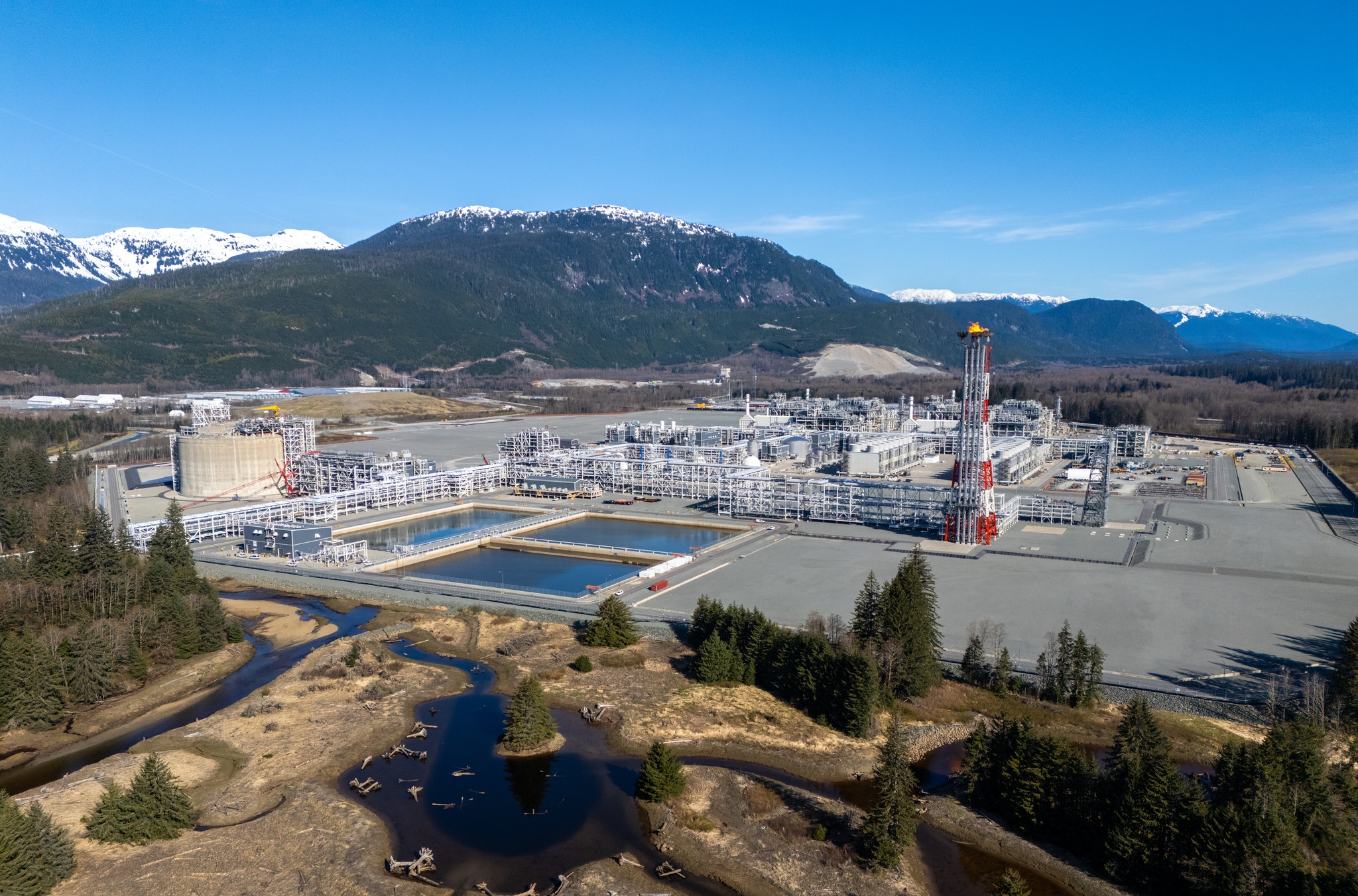
In February, LNG Canada shipped the 50th cargo of LNG from the two-train plant in Kitimat, which has a capacity of 14 mtpa.
With the proposed Phase 2 expansion, Shell and its partners plan to double the terminal’s capacity to 28 mtpa.
At 40 percent, Shell has the largest working interest in the LNG Canada JV.
MidOcean Energy, the LNG unit of US-based energy investor EIG, completed its deal to buy a 20 percent interest in Petronas’ entities in Canada, including a stake in the LNG Canada project, in December last year.
Besides Petronas and MidOocean, other partners include PetroChina, Mitsubishi Corporation, and Kogas.