This story requires a subscription
This includes a single user license.
According to Gasum, the share of biomethane out of all gas volumes sold to its maritime customers increased from 0.8 percent in 2024 to 12.3 percent in 2025.
The company did not provide further details.
“This is a very positive development that clearly shows the viability of the methane pathway in decarbonizing shipping. We anticipate a continued growth in biomethane volumes going forward, since we see that the demand for lower-emission fuel solutions continues to strengthen,” said Jacob Granqvist, VP maritime at Gasum.
Gasum noted that one driver behind this development is the FuelEU Maritime regulation, which, together with other EU regulations, is supporting the shift towards lower-emission fuels and accelerating the maritime sector’s transition.
FuelEU Maritime requires ships to reduce the carbon intensity of fuel incrementally up to 80 percent over the next 25 years.
In practice, this means increasing the use of renewable fuels in the maritime sector, the company noted.
The EU allows for a pooling mechanism, whereby ships that are able to sail on renewable fuel can generate carbon intensity reductions on behalf of ships that are not able to do so.
This has made it easier to introduce renewable fuels and reduce emissions for the whole European maritime transport sector as costs are shared among all ship operators, Gasum said.
“To sustain the positive development, it is essential to maintain momentum in Europe. Continued progress will require increased biomethane production, an unhindered trade across borders, and the further development of a strong and growing European market for biomethane”, Granqvist said.
Gasum’s LNG bunkering business
Gasum recently extended its bio-LNG supply agreement with compatriot shipping company Wasaline through 2027.
Wasaline, part of the Swedish shipping group Stena Line, runs a shipping route between Finland and Sweden.
Its vessel, Aurora Botnia, uses batteries and bio-LNG supplied by Gasum.
Gasum supplies LNG and bio-LNG via trucks and vessels.
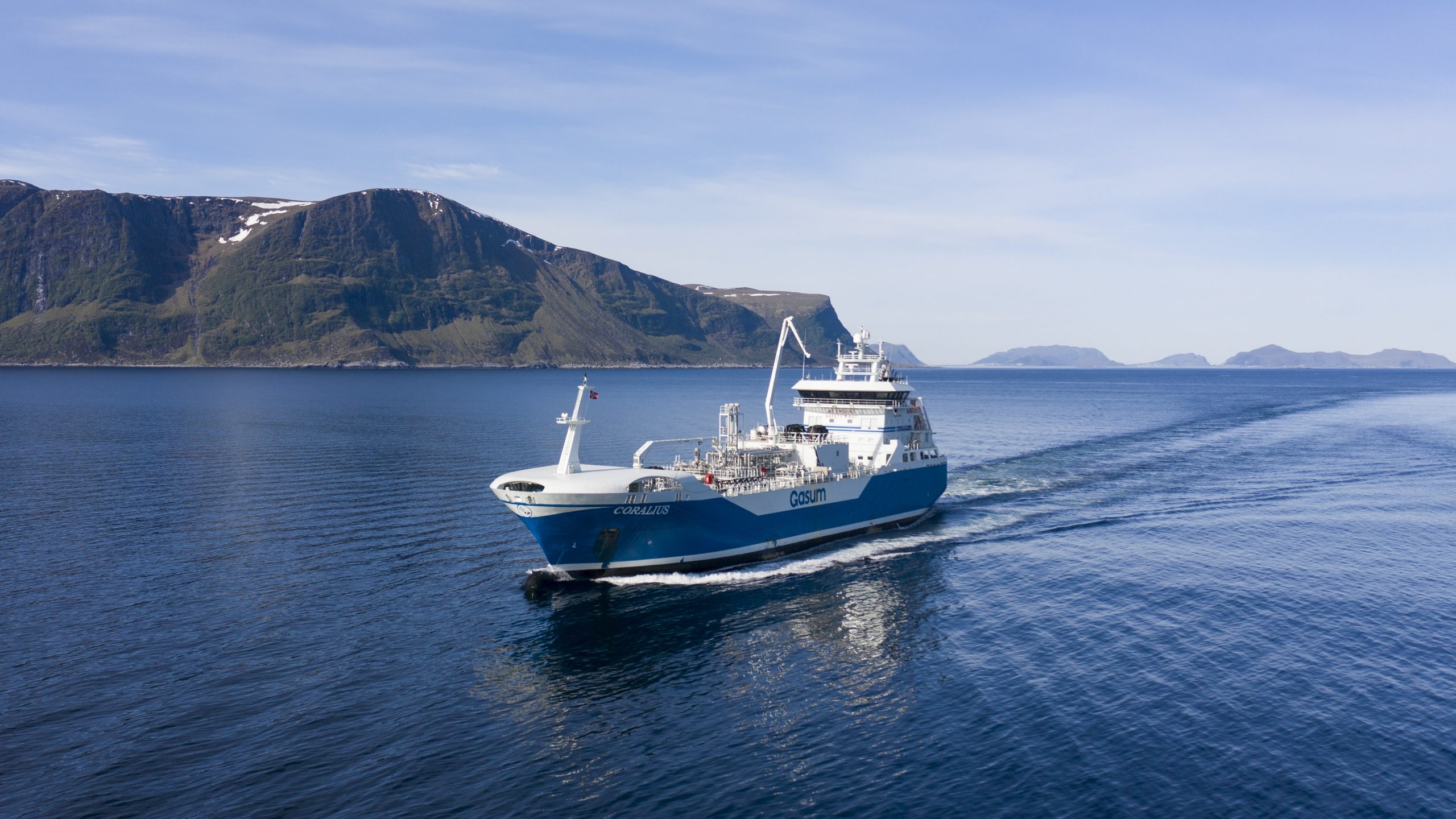
According to its website, the firm operates a fleet of six LNG bunkering vessels, including one under construction.
Earlier this year, Turkiye’s RMK Marine officially began construction of an LNG bunkering vessel for a joint venture between Gasum and the Swedish shipping firm Sirius.